A year ago I wrote a short story in great haste, and really enjoyed the experience. I've tidied it up a little bit since them, and will now inflict (in several episodes) it on the world (all 3 of you) for nostalgia's sake...
Nick's Carol
Nick sat on the edge of the bed, in the semi-darkness of his own special
room. The cushioning movement of the mattress was inviting but the
creaking and sagging under his considerable weight was alarming, so he sat very
still for a moment and just sighed. This time of year he slept alone, and
in all honesty on this particular night he was quite relieved at not having to
talk. He just wanted sleep, now and badly, and he could only afford a few
hours before starting work again.
It was tricky pushing off first one boot and then the
other using only his feet, but there was no way he was going to risk bending
down, for both his sake and the bed’s. He had hung his coat on the
bedpost, but was there any point in taking anything else off? Not really:
he would hardly be asleep long enough, and he’d be wearing these trousers for
the next forty eight hours anyway, so a few hours in bed would make little
difference. They’d be fine, he thought, as he pivoted round, raised his
legs onto the bed and flopped backwards. The bed made a sound suggesting
that it had been holding its breath at the sight of the approaching mass but
was now having its last breath squeezed out, to the accompaniment of
someone cutting taut piano wires. Nick lay fearfully still for a moment,
but the bed, the floor, gravity and Newton, all seemed to be holding a truce,
so he relaxed, staring dreamily at the shifting shadows above him.
Outside, the moonlight was sparkling on the ice, and inside the ceiling
looked like a monochrome reflection of a babbling stream. He watched the
shimmering light, moving his eyes across the ceiling and down the wall, until
the strobing disappeared behind the dark hillock of his own belly. He
gave it a quick jiggle, just to make sure he could, and shut his eyes. A
thirty-six hour shift in the workshop had taken its toll and although his eyes
ached with the strain, and the noise of the nightshift just reached the edges
of his perception, he was soon asleep.
And then he was awake. Suddenly, and he didn’t know
why. A noise, somewhere, or a song or maybe a word. Something...
There it was again! But no song; instead a
shuffling, a dragging, and with it a tinkling, a clanking, somewhere in the
building. It was drawing closer, along the corridor towards his door.
No one should be out there at this time of night, not on this
night! Nick’s sleepy mind was back online. The proximity of the
worrying sounds suggested that whatever produced them was now merely a few
steps from his room. Where was security? The Gate-Elves knew no one was
allowed anywhere near this corridor, let alone his door. But it
transpired that the door was irrelevant, as first a hand, followed by its arm,
a torso, and then the whole figure of a man passed through as though nothing
physical stood in its way. Given the relative transparency of the form
now stood before him, eyes shining in the night, it appeared to be the man and
not the door that had a loose relationship with physics. Nick’s hand,
which had been on its way towards the panic-button under his pillow (there had
been time when ‘fans’ had come a little too close for comfort) slipped away as,
at a subconscious level, he realised two things:
First, Security was probably useless in dealing with
a man that can walk through walls.
Second, he recognised the figure before him.
By now, Nick was upright on the edge of his tortured
bed, staring at the unnerving form before him – through whom he could still
just make out the panelling of the door. Although the details were
necessarily hazy, he registered the long, brown, worn robe; the sandals
protruding from its ragged hem; the balding dome, with incongruously well-kempt
hair over the ears, flowing seamlessly into a long, grey, beard. Hanging low on
his chest was a simple cross of grey metal, and in his left hand a small,
bulging hessian sack, the source of the tinkling and clanking.
“Oh, really?” said Nick, fear momentarily
suppressed by recognition and the long-practised habit of keeping the upper
hand when dealing with trouble. “The bag and everything?”
The spectre remained impassive, but his mouth opened
and instead of the dry, dusty and distant voice Nick had been expecting (he’d
read plenty of books, he knew how this ought to go) there came the same deep
voice which Nick remembered and had comforted so many in years gone by.
Tonight, not so much.
“Are you really in any position to criticise the
exploitation of the symbolism of legend?”
Uh oh, he could see which way this was going.
“Don’t start on me. We went through this over 1500
years ago. It’s not going to change anything tonight.”
“It doesn’t even trouble you that I have returned
from Beyond to visit you?”
“I live at the North Pole without freezing, in an
invisible citadel, surrounded by magic elves and singing penguins.
Exactly how disoriented were you expecting me to be?” This was all
essentially true, but also masked a deep sense of unease that threatened to
spill over into anxiety that something fundamental to his life was coming under
threat. “It’s hardly original, is it Nicholas?”, he continued in a tone
that was meant to sound relaxed yet picky, “And where’s your bit of cloth to
keep your jaw shut? You missed it.”
“The trappings of death are unnecessary where I have
come from.” For a moment the gauzy shape held a rich glow, then faded.
This troubled Nick more than the previous few minutes.
Nicholas continued, “I know that the way things have
developed were often beyond your control. But you have such resources, such
power, such opportunity – and what do you do with it? You’ve lost your
way. You have hidden...you have forgotten.”
“Oh I see, we’re going to have some lessons in the T-MOC,
like I haven’t heard them a thousand times before.”
“I’m not sure you would recognise the T-MOC anymore,
not if it bit you.” Nicholas, paused and held Nick in his gaze, as if he were
considering whether what he had to say next was too painful to verbalise.
“You will be visited tonight by three Guides...”
“You have got to be joking – “
“Three visitors, and they will deal with you.
Watch for the first at midnight.”
Nick opened his eyes. He was lying in bed.
The ceiling was flickering as usual. He looked at the door – no one
there. He realised he’d been holding his breath for some time,
exhaled quietly, and started breathing regularly; the bed joined in on
percussion. Why tonight of all nights, on Eve’s Eve, would he dream
of someone he hadn’t seen in centuries, dead and buried a hundred generations
ago? Well, when he said ‘dead’...technically anyway, to all intents and
purposes. He was part of the past, not the present, in more ways than
one. He had no right turning up in his dreams, not tonight. Him,
with his dogmatic commitment to ethereal hopes, to living forever, now fifteen
hundred years six-feet under, dead, dead as a doorna- no, don’t say that.
And the bag of gold, what was that about? No academic
believed the coins and chimney stuff.
Overwork and too much adrenalin. Penguin
coffee. That was the problem.
A bell began to strike midnight. Nick went
rigid, eyes staring at the ceiling. It was not simply that the dream gave
the bell an ominous sound - he didn’t own a clock. Clocks were a pretty
vague concept in a place where the only regular event was annual; the
nearest was a quarter of a mile away, and it didn’t have a bell. It had a big
flower (in the centre of a dial surrounded by animated carvings of gnomes) the
petals of which unfolded once a month, when a clockwork fairy popped out and
said “PoopPoop! It’s February!” or whatever. There was no other clock.
But the bell of the clock that wasn’t there continued
to toll. Nine...ten...eleven...twelve...
Tuesday, December 20, 2011

Monday, December 12, 2011
Dalrymple: freedom
The idea that freedom is merely the ability to act upon one's whims is surely very thin and hardly begins to capture the complexity of human existence; a man whose appetite is his law strikes us not as liberated but enslaved. And when such a narrowly conceived freedom is made the touchstone of public policy, a dissolution of society is bound to follow. No culture that makes publicly sanctioned self-indulgence its highest good can long survive; a radical egotism is bound to ensue, in which any limitations upon personal behaviour are experienced as infringements of basic rights. Distinctions between the important and the trivial, between the freedom to criticise received ideas and the freedom to take LSD, are precisely the standards that keep societies from barbarism.
Our Culture... p224.
Friday, December 09, 2011
Dalrymple: art is more
"It has always been the job of artists," writes Norman Rosenthal in his grossly disingenuous essay...it would be difficult to formulate a less truthful, more wilfully distorted summary of art history, of which a small part - and by no means the most glorious - is mistaken for the whole, that the unjustifiable may be justified.
"Artists must continue the conquest of new territory and new taboos," Rosenthal continues, in prescriptive mood. He admits no other purpose of art: to break taboos is thus not a possible function of art but its only function. Small wonder, then, that if all art is the breaking of taboos, all breaking of taboos soon comes to be regarded as art.
Of course he doesn't really mean what he says; but then for intellectuals like him, words are to express propositions or truth but to distinguish the writer socially from the common heard, too artistically unenlightened and unsophisticated to advocate the abandonment of all restraint and standards...
...a taboo exists only if it is a taboo for everyone: and what is broken symbolically in art will soon enough be broken in reality.
...when respect, hatred, love, loathing, and contempt all call forth the same artistic product, then our sensibility, our power of discrimination, has been eroded out of existence.
Our Culture..., p146-8
Thursday, December 08, 2011
Paul Tripp - repentance
...I have often been struck with the reality that the man sitting in front of me lacked accurate knowledge of himself. And you can't grieve what you don't see, you can't confess what you haven't grieved, and you can't repent of what you haven't confessed.
Paul Tripp
Wednesday, November 30, 2011
Dalrymple: the good of humanity as motive
Almost every intellectual claims to have the welfare of humanity, and particularly the welfare of the poor, at heart; but since no mass murder takes place without its perpetrators alleging that they are acting for the good of mankind, philanthropic sentiment can plainly take a multiplicity of forms.
Our Culture..., p77
Wednesday, November 16, 2011
Dalrymple: what new atheism misses
Just a link to a fascinating article by Dalrymple, himself an atheist, on what new atheism has obscured.
Dalrymple: cost and context of choice as king
Written in 2004, long before the economic crash, and of the riots of 2011:
Our Culture..., p.17&18
The consequences to the children and to society do not enter into the matter: for in any case it is the function of the state to ameliorate by redistributive taxation the material effects of individual irresponsibility, and to ameliorate the emotional, educational and spiritual effects by an army of social workers, psychologists, educators, counselors and the like, who have themselves come to form a powerful vested interest of dependence on the government.
So while my patients know in their hearts that what they are doing is wrong, they are encouraged nevertheless to do it by the strong belief that they have the right to do it, because everything is merely a matter of choice. Almost no one in Britain ever publicly challenges this belief....
...Ultimately the moral cowardice of the intellectual and political elites is responsible for the continuing social disaster that has overtaken Britain, a disaster whose full social and economic consequences have yet to be seen. A sharp economic downturn would expose how far the policies of successive governments, all in the direction of libertinism, have atomised British society, so that all social solidarity within families and communities, so protective in times of hardship, has been destroyed.
Our Culture..., p.17&18
Tuesday, November 08, 2011
Differentiated Engagement
People often highlight the tension between Peter's calls to resist and submit. But Peter, argues Volf, is giving 'an example of differentiated acceptance and rejection of the surrounding culture'.
That is, foreigners dwell respectfully in their host nation but participate in culture only to the extent that its values and customs coincide with their own that they wish to preserve. In this way the salutation of the letter introduces a concept of differentiated engagement with society...of neither full assimilation nor complete withdrawal.
Tim Keller summarises:
Unlike models that call for a transformation of culture or call for a Christendom-like alliance of church and state, Peter expects the gospel to be always highly offensive, never completely embraced or accepted by the world. This is a caution to those evangelicals and mainline Christians who hope to bring about an essentially Christian culture.
And unlike models that call solely for evangelism and are highly pessimistic about influencing culture, both Peter in 1 Peter 2:12 and Jesus in Matthew 5:16 expect some aspects of Christian faith and practice ot be highly attractive in any pagan culture, influencing people to praise and glorify God.
Quoted in Everyday Church, Tim Chester and Steve Timmis, p60-61
The Books #8 - Amusing Ourselves to Death
Cor me and Dickie have really let this one go....
Anyway, not a Christian book or even a religious book this time, but I think one of the best books I have ever read with profound implications on how we live as humans, Christians, and Bible teachers.

Neil Postman's book was published in 1985, which means he misses the entire internet age. But this study of media, entertainment, and the trade-off that new technology always produces, is so timeless it feels utterly relevant now (that's not to say I would not, if one appeared, immediately buy a study on the internet produced by Postman. I would.)
Postman is a writer of clarity extraordinaire, and no words are wasted in this volume as he reveals how a shift in technology (primarily TV here) produces a shift in the way we think and live - but usually we don't notice and go blindly on.
Prepare yourself for revelations galore about the way you view the world because of the technology you appropriate. Sheer brilliance.
Anyway, not a Christian book or even a religious book this time, but I think one of the best books I have ever read with profound implications on how we live as humans, Christians, and Bible teachers.
Neil Postman's book was published in 1985, which means he misses the entire internet age. But this study of media, entertainment, and the trade-off that new technology always produces, is so timeless it feels utterly relevant now (that's not to say I would not, if one appeared, immediately buy a study on the internet produced by Postman. I would.)
Postman is a writer of clarity extraordinaire, and no words are wasted in this volume as he reveals how a shift in technology (primarily TV here) produces a shift in the way we think and live - but usually we don't notice and go blindly on.
Prepare yourself for revelations galore about the way you view the world because of the technology you appropriate. Sheer brilliance.
Tuesday, November 01, 2011
Luther: this is priceless!
The defects in a preacher are soon spied; let a preacher be endued with ten virtues, and but one fault, yet this one will eclipse and darken all his virtues and gifts, so evil is the world in these times. Dr. Justus Jonas has all the good virtues and qualities a man may have; yet merely because he hums and spits, the people cannot bear that good and honest man.
Tabletalk
Monday, October 31, 2011
Quick review: Our Culture...What's Left of it
A friend bought me this one and despite the alarming cover, it makes for an interesting read.
It's a collection of articles from the late 90s up to 2004 by a man who has travelled widely (he doesn't let much time pass without reminding us of this) but spent most of his years as a doctor in difficult situations (inner city, prisons etc) which has given him, in many ways, a view of life not dissimilar to that of traditional Christian morality, but developed from the hard knocks of real life rather than the Bible (an interesting point in itself!)
And that's what makes the book interesting: he places himself in distinction from the liberal intelligentsia (they come in for a hammering) who pontificate from the security of their upper/middle class environs without bearing the true consequences of their philosophy; whereas he has been engaged in an almost futile struggle to help those at the bottom of the heap who end up playing out the true meaning of relativism in their damaged and disastrous lives.
The essays cover a lot of ground from why criminals get fatter in prison to the Lady Chatterly trial (lots of quotations of profanity here, just to warn you - but the essay puts the case in a completely different light from the popular conception).
So, powerful social comment from someone who has seen the dark-side; nicely and eloquently debunks much of what has passed for tolerant enlightened thinking. But lacking in hope, because he honestly can't see how things will change (and one can understand why), underlined by his career decision which is revealed in the very first article.
NB. being a doctor in some very brutal situations, and having travelled to some very nasty places, there are descriptions and words here which don't make for pleasant reading (especially late at night - eg. his essay on Rosemary and Fred West).
It's a collection of articles from the late 90s up to 2004 by a man who has travelled widely (he doesn't let much time pass without reminding us of this) but spent most of his years as a doctor in difficult situations (inner city, prisons etc) which has given him, in many ways, a view of life not dissimilar to that of traditional Christian morality, but developed from the hard knocks of real life rather than the Bible (an interesting point in itself!)
And that's what makes the book interesting: he places himself in distinction from the liberal intelligentsia (they come in for a hammering) who pontificate from the security of their upper/middle class environs without bearing the true consequences of their philosophy; whereas he has been engaged in an almost futile struggle to help those at the bottom of the heap who end up playing out the true meaning of relativism in their damaged and disastrous lives.
The essays cover a lot of ground from why criminals get fatter in prison to the Lady Chatterly trial (lots of quotations of profanity here, just to warn you - but the essay puts the case in a completely different light from the popular conception).
So, powerful social comment from someone who has seen the dark-side; nicely and eloquently debunks much of what has passed for tolerant enlightened thinking. But lacking in hope, because he honestly can't see how things will change (and one can understand why), underlined by his career decision which is revealed in the very first article.
NB. being a doctor in some very brutal situations, and having travelled to some very nasty places, there are descriptions and words here which don't make for pleasant reading (especially late at night - eg. his essay on Rosemary and Fred West).
700!
Cor that came round quick (Schaeffer's fault). As always thanks to that great centenarian, Dickie Mint.
Dalrymple: the frivolity of evil
...the frivolity of evil: the elevation of passing pleasure for oneself over the long-term misery of others to whom one owes duty. What better phrase than the frivolity of evil describes the conduct of a mother who turns her fourteen year old child out of doors because her latest boyfriend does not want him or her in the house? And what better phrase describes the attitude of those intellectuals who see in this conduct nothing but an extension of human freedom and choice, another thread in life's rich tapestry?
Our Culture... p12
Luther: a good preacher
A good preacher should have these properties and virtues: first, to teach systematically; secondly, he should have a ready wit; thirdly, he should be eloquent; fourthly, he should have a good voice; fifthly, a good memory; sixthly, he should know when to make an end; seventhly, he should be sure of his doctrine; eightly, he should venture and engage body and blood, wealth and honor, in the Word; ninthly, he should suffer himself to be mocked and jeered of every one.
Tabletalk 400 (or 397 depending which one you look at!)
Thursday, October 20, 2011
Dalrymple: medical happiness
There is something to be said here about the word "depression", which has almost entirely eliminated the word and even the concept of unhappiness from modern life. Of the thousands of patients I have seen, only two or three have ever claimed to be unhappy: all the rest have said they were depressed. This semantic shift is deeply significant, for it implies that dissatisfaction with life is itself pathological, a medical condition, which it is the responsibility of the doctor to alleviate by medical means. Everyone has a right to health; depression is unhealthy; therefore everyone has a right to be happy (the opposite of being depressed). This idea in turn implies that one's state of mind, or one's mood, is or should be independent of the way one lives one's life, a belief that must deprive human existence of all meaning, radically disconnecting reward from conduct.
Our Culture, What's Left of It, p9
Wednesday, October 19, 2011
Luther: don't torment them!
I would not have preachers torment their hearers, and detain them with long and tedious preaching, for the delight of hearing vanishes therewith, and the preachers hurt themselves.Table Talk
Wednesday, October 12, 2011
Without eternity...
Just two points from Paul tripp's article on Eternity Amnesia:
3. Asking too much of people. When we fail to live with forever in view, we will unwittingly and consistently ask the people around us to provide the paradise that our hearts crave. The people around us do not have the ability to give us that constant inner peace and satisfaction that we will only ever experience in eternity. Asking the people in your church to give what they cannot give ends in disappointment, frustration, conflict, and division.
4. Being controlling or fearful. In ministry, why do we tend to swing from fear to control and back again? Because, in our eternity amnesia, we feel as if somehow, some way, life is passing us by. It's important to remember that our unfulfilled ministry longings do not so much announce to us that this world or our ministries have failed us, but that we were designed for another world. Peace in our present life and ministry is found only when we live with the coming world in view.
Friday, October 07, 2011
Caution, historians of Providence
A Christian has to affirm Providence, but a Christian historian should not assume to know the mind of God about most particular events. In fact, there are all sorts of bad examples in history where people have falsely made that assumption. In the modern world, there aren't too many examples of Christian historians who have employed particular examples of Providence well.
For most historians, I think it's wiser to affirm a general sort of Providence and yet not presume that you as an individual can know what God intended for any particular situation in the past.
Mark Noll
Friday, September 30, 2011
Pastor Yusef: spritual tests
Many attempt to flee from their spiritual tests, and they have to face those same tests in a more difficult manner, because no one will be victorious by escaping from them, but with patience and humility he will be able to overcome all the tests, and gain victory.
Yusef Nadarkhani
Lakan Prison in Rasht
2/June/2010
(currently facing possible execution in Iran)
Thursday, September 15, 2011
Quick-review: Love Wins
I have written a much longer thing about this book for other purposes, but really just want to make a few much briefer comments here. This is partly because it won't be a "quick" review if I don't, and partly because of Jon Dyer's timely article "Let not many of you presume to be bloggers" which was posted at the height of the blogging frenzy about 'Love Wins'.
What is Bell trying to do with this book? I think it's this: soften the edges of the 'traditional' view of judgment so as to make the Christian faith more appealing to non-Christians and less problematic to Bible-believers. And if we're honest, who has not been tempted to do so? We're all looking for the way to make it more...well, comfortable. But from an evangelical position, such a wish cannot be the dominant force in how we look at what the Bible has to say. Which leads to a number of concerns about the book - all of which I give as provisional, in that it is possible I have not read the text closely enough, and perhaps were Rob Bell here to comment he would show me how I have erred. However, as it stands right now, what bothers me is this:
1. It's pretty dull. It promises to deal with the biggest question facing humanity, but manages (for me) to make that unexciting.
2. Contra Tim Keller's maxim that we should present the opposing view as well as we possibly can, Bell presents the 'traditional view' as something incoherent, positing concepts that are complementary or held in tension as competing and irreconcilable.
3. On the plus side he does ask some useful questions which probably many Christians struggle with and we need to develop better answers for them.
4. The most infuriating thing is how checking out his argument is routinely obscured: no footnotes, no interaction with other interpretations, not even complete Bible references. This is very worrying when bearing in mind younger Christians who might struggle to followup many of his (controversial and sometimes tenuous) claims...
5. ...which is very important for when he fires off a magazine of verses to prove a point but without context - eg.in pulling together many texts to show God's justice is always corrective (p.85ff) he largely draws on verses promising restoration after the Exile: texts which neither refer to eternal punishment nor even, by and large, to individuals who were corrected, as most of them died in Babylon.
6. Is he a universalist? Maybe, but having given several reasons for presuming most people will be saved (ie. hell is an offputting idea, God's love beats any other criteria for deciding how God might react to sin, God's judgments are always restorative) he then leaves the door wide open to assume pretty much everyone will be saved, maybe even post-mortem (p.76). Or maybe not (p.115) as, having led us up to edge of universalism, he basically says "But who knows? And we don't have to decide".
7. There are also, sadly, many unqualified assumptions and interpetations of Biblical texts (pp.26, 51, 85 for example) that are occasionally quite odd.
8. Again, on the plus side, he does eventually emphasise the cross - but even here in a way that suffers from vagueness.
I'm really loathe, in light of the outrage its publication caused, to be harsh - and indeed have cautioned against hard responses to Rob Bell on several occasions. But it really isn't a great book.
Interestingly, my wife pointed out a paragraph in an unrelated blog written by someone who has moved away from the 'traditional' view. It's interesting because of its gut-reaction factor: the writer was concerned about the apparent kidnapping of a small child that had just occurred:
And I cried in the kitchen, pouring out cereal, and (my husband) quietly admitted that it is in these times that he really, really wishes there was eternal, conscious punishment, the worst of any hell, for men like this because anything else seems not-enough for what that poor boy might be going through, for even the act of making a child ask for his mama and then keeping him from her is a sin beyond any I can fathom.
Hell is a hard thing to contemplate, and like CS Lewis many of us would remove the doctrine if it lay in our power to do so. But that is hardly the last word or the only deeply felt and authentic response to it, as that quote shows. And it certainly isn't the way to govern how we interpret the Bible.
What is Bell trying to do with this book? I think it's this: soften the edges of the 'traditional' view of judgment so as to make the Christian faith more appealing to non-Christians and less problematic to Bible-believers. And if we're honest, who has not been tempted to do so? We're all looking for the way to make it more...well, comfortable. But from an evangelical position, such a wish cannot be the dominant force in how we look at what the Bible has to say. Which leads to a number of concerns about the book - all of which I give as provisional, in that it is possible I have not read the text closely enough, and perhaps were Rob Bell here to comment he would show me how I have erred. However, as it stands right now, what bothers me is this:
1. It's pretty dull. It promises to deal with the biggest question facing humanity, but manages (for me) to make that unexciting.
2. Contra Tim Keller's maxim that we should present the opposing view as well as we possibly can, Bell presents the 'traditional view' as something incoherent, positing concepts that are complementary or held in tension as competing and irreconcilable.
3. On the plus side he does ask some useful questions which probably many Christians struggle with and we need to develop better answers for them.
4. The most infuriating thing is how checking out his argument is routinely obscured: no footnotes, no interaction with other interpretations, not even complete Bible references. This is very worrying when bearing in mind younger Christians who might struggle to followup many of his (controversial and sometimes tenuous) claims...
5. ...which is very important for when he fires off a magazine of verses to prove a point but without context - eg.in pulling together many texts to show God's justice is always corrective (p.85ff) he largely draws on verses promising restoration after the Exile: texts which neither refer to eternal punishment nor even, by and large, to individuals who were corrected, as most of them died in Babylon.
6. Is he a universalist? Maybe, but having given several reasons for presuming most people will be saved (ie. hell is an offputting idea, God's love beats any other criteria for deciding how God might react to sin, God's judgments are always restorative) he then leaves the door wide open to assume pretty much everyone will be saved, maybe even post-mortem (p.76). Or maybe not (p.115) as, having led us up to edge of universalism, he basically says "But who knows? And we don't have to decide".
7. There are also, sadly, many unqualified assumptions and interpetations of Biblical texts (pp.26, 51, 85 for example) that are occasionally quite odd.
8. Again, on the plus side, he does eventually emphasise the cross - but even here in a way that suffers from vagueness.
I'm really loathe, in light of the outrage its publication caused, to be harsh - and indeed have cautioned against hard responses to Rob Bell on several occasions. But it really isn't a great book.
Interestingly, my wife pointed out a paragraph in an unrelated blog written by someone who has moved away from the 'traditional' view. It's interesting because of its gut-reaction factor: the writer was concerned about the apparent kidnapping of a small child that had just occurred:
And I cried in the kitchen, pouring out cereal, and (my husband) quietly admitted that it is in these times that he really, really wishes there was eternal, conscious punishment, the worst of any hell, for men like this because anything else seems not-enough for what that poor boy might be going through, for even the act of making a child ask for his mama and then keeping him from her is a sin beyond any I can fathom.
Hell is a hard thing to contemplate, and like CS Lewis many of us would remove the doctrine if it lay in our power to do so. But that is hardly the last word or the only deeply felt and authentic response to it, as that quote shows. And it certainly isn't the way to govern how we interpret the Bible.
Tuesday, September 13, 2011
Spiritual father
In Christianity Today Brett McCracken writes, "In order to remain relevant in this new landscape, many evangelical pastors and church leaders are following the lead of the hipster trendsetters, making sure their churches can check off all the important items on the hipster checklist." Including:"Show clips from R-rated Coen Brothers films (No Country for Old Men, Fargo) during services."Sponsor church outings to microbreweries."Put a worship pastor onstage decked in clothes from American Apparel."Be okay with cussing."I'm not against cultural awareness and engagement. For most people today, pop culture is their culture, so it can be an act of love to learn it. But to be a spiritual father means you are definitely not Wholly Relevant. Dads are, by definition, older and not hip. This one hurts. I spent much of my forties not wanting to accept my age, not wanting to lose my place among the popular and the trendsetting.However, to pursue relevance is to lose your spiritual power. When all you read, watch, and listen to is what everyone else is reading, watching, and listening to, you have nothing to say.Chris, a young guy in my church who moved to Manhattan for grad school, explained to me: "The highly relevant pastor is bro'. There's certainly a place for pastors to be in tune with culture and to be relatable. But where do I find a man of God who will nurture my spiritual life? That's what's I need. Relevance is easy to find. But when I stumble in that same old sin that I keep slipping in, I need someone with wisdom and maturity to go to. It's fine if that person also happens to know about some great new indie bands, but in those moments, I need something else. I need depth."
Friday, September 09, 2011
Quick-review: Cry the Beloved Country
Standing in a century-long line between Uncle Tom and To Kill a Mockingbird, Cry the Beloved Country explores similar territory but with a distinctive voice. Unlike Mockingbird, it does not leave a warm glow as was generated by the way Harper Lee communicates a Southern childhood in spite of the harsh reality of racism. This is not a failure of writing, but a necessary effect of a different kind of book. Here there are real, fallible, loveable characters (Kumalo, Msimangu, Jarvis) but the canvas upon which they are painted is vast; it is the size of a nation. And the tragedy of that nation's peoples is too complex and great for a 'happy ending'. Alan Paton was writing soon after WWII and the solution to South Africa's problems were still half a century away, and so there is no sweetening of the tragedy encapsulated in the novel. But for all that, it is suffused with hope, even though its fruition is admitted to be so far off as to be unknowable.
In 1948 an ageing Zulu parson travels to Johannesburg to search for his sister and his son who, like millions of others, left the devastated countryside and crumbling tribal culture (both victims of complex factors, but predominantly exploitation by the white minority) to find a new life. His journey of discovery reveals perhaps the most significant character in the book, South Africa itself, and the complexities of a divided nation, with a fearful minority in control, and a devastated majority looking for hope.
A truly profound and moving book, written in a style which initially takes some getting used to, but also helps to produce an immediacy of effect.
In 1948 an ageing Zulu parson travels to Johannesburg to search for his sister and his son who, like millions of others, left the devastated countryside and crumbling tribal culture (both victims of complex factors, but predominantly exploitation by the white minority) to find a new life. His journey of discovery reveals perhaps the most significant character in the book, South Africa itself, and the complexities of a divided nation, with a fearful minority in control, and a devastated majority looking for hope.
A truly profound and moving book, written in a style which initially takes some getting used to, but also helps to produce an immediacy of effect.
Tuesday, September 06, 2011
Wangerin: pay attention! (the blessings of affliction)
Surely it's high time - isn't it? - that we pay as much attention to the blessings of a long affliction as we do to the pain for which we curse it. Please: it's not a man's peculiar interpretation or a woman's particular gift for a long-suffering patience which enables each to live the sickness better than another person does. It's a faith available to everyone. (Though there always is, of course, a learning curve.)
Pay attention!
In the Lakota tongue: wachinksapa yo! - which meaning is closer to "Be attentive" than to something we do sporadically. Be ever in a state of attention.
Wangerin, Letters, p196-7
Wangerin: no longer rushing into the future
I don't look forward so much any more, dashing to grasp the future. I look left and right. I've the Time, you see, to scrutinise all that is. And what is companions me. The trees can't list their roots and move. A single motion fills a season. Well then: let me abide by them awhile. My toes, my roots. A good rain can linger almost forever.
The shorter the time, the vaster my scope.
Wangerin, Letters, p.195
Wangerin: little krill and death
I find myself somewhat sorrowful to lose the riveting focus which death;s likelihood provides a sick old man. Now, together with my resprouting hairs, there rushes back a sea-tide of all the little things that hector daily living - the krill that clouds and crowds the waters once the whale is gone. Perhaps that indicates another benefaction which I ought to draw from the previous seven months: stick, Wally, to the sense of the proximity of death in order to recognise (at some spiritual and perdurable level) how little are the little krill - even as little as dying (always, always) is near. Here.
Letters from the Land of Cancer, p.124
Wangerin: Robert Siegel's Rinsed with Gold
I'm very old fashioned (actually, Milton would take issue with this and accuse me of being modern a cheap) but I do prefer it when a poet has spent a long time working in rhyme to the finished item. So it has to be really striking for me when he doesn't. Robert Siegel hasn't hear, but his imagery has such rhyme I found this wonderful:
Let this day’s air praise the Lord—
Rinsed with gold, endless, walking the fields,
Blue and bearing the clouds like censers,
Holding the sun like a single note
Running through all things, a basso profundo
Rousing the birds to an endless chorus.
Let the river throw itself down before him,
The rapids laugh and flash with his praise,
Let the lake tremble about its edges
And gather itself in one clear thought
To mirror the heavens and the reckless gulls
That swoop and rise on its glittering shores.
Let the lawn burn continually before him
A green flame, and the tree’s shadow
Sweep over it like the baton of a conductor,
Let winds hug the housecorners and woodsmoke
Sweeten the world with her invisible dress,
Let the cricket wind his heartspring
And draw the night by like a child’s toy.
Let the tree stand and thoughtfully consider
His presence as its leaves dip and row
The long sea of winds, as sun and moon
Unfurl and decline like contending flags.
Let blackbirds quick as knives praise the Lord,
Let the sparrow line the moon for her nest
And pick the early sun for her cherry,
Let her slide on the outgoing breath of evening,
Telling of raven and dove,
The quick flutters, homings to the green houses.
Let the worm climb a winding stair,
Let the mole offer no sad explanation
As he paddles aside the dark from his nose,
Let the dog tug on the leash of his bark
The startled cat electrically hiss,
And the snake sign her name in the dust
In joy. For it is he who underlies
The rock from its liquid foundation,
The sharp contraries of the giddy atom,
The unimaginable curve of space,
Time pulling like a patient string,
And gravity, fiercest of natural loves.
At his laughter, splendor riddles the night,
Galaxies swarm from a secret hive,
Mountains split and crawl for aeons
To huddle again, and planets melt
In the last tantrum of a dying star.
At his least signal spring shifts
Its green patina over half the earth,
Deserts whisper themselves over the cities,
Polar caps widen and wither like flowers.
In his stillness rock shifts, root probes,
The spider tenses her geometrical ego,
The larva dreams in the heart of the peachwood,
The child’s pencil makes a shaky line,
The dog sighs and settles deeper,
And a smile takes hold like the feet of a bird.
Sit straight, let the air ride down your backbone,
Let your lungs unfold like a field of roses,
Your eyes hang the sun and moon between them,
Your hands weigh the sky in even balance,
Your tongue, swiftest of members, release a word
Spoken at conception to the sanctum of genes,
And each breath rise sinuous with praise.
Let your feet move to the rhythm of your pulse
(Your joints like pearls and rubies he has hidden),
And your hands float high on the tide of your feelings.
Now, shout from the stomach, hoarse with music,
Give gladness and joy back to the Lord,
Who, sly as a milkweed, takes root in your heart.
Let this day’s air praise the Lord—
Rinsed with gold, endless, walking the fields,
Blue and bearing the clouds like censers,
Holding the sun like a single note
Running through all things, a basso profundo
Rousing the birds to an endless chorus.
Let the river throw itself down before him,
The rapids laugh and flash with his praise,
Let the lake tremble about its edges
And gather itself in one clear thought
To mirror the heavens and the reckless gulls
That swoop and rise on its glittering shores.
Let the lawn burn continually before him
A green flame, and the tree’s shadow
Sweep over it like the baton of a conductor,
Let winds hug the housecorners and woodsmoke
Sweeten the world with her invisible dress,
Let the cricket wind his heartspring
And draw the night by like a child’s toy.
Let the tree stand and thoughtfully consider
His presence as its leaves dip and row
The long sea of winds, as sun and moon
Unfurl and decline like contending flags.
Let blackbirds quick as knives praise the Lord,
Let the sparrow line the moon for her nest
And pick the early sun for her cherry,
Let her slide on the outgoing breath of evening,
Telling of raven and dove,
The quick flutters, homings to the green houses.
Let the worm climb a winding stair,
Let the mole offer no sad explanation
As he paddles aside the dark from his nose,
Let the dog tug on the leash of his bark
The startled cat electrically hiss,
And the snake sign her name in the dust
In joy. For it is he who underlies
The rock from its liquid foundation,
The sharp contraries of the giddy atom,
The unimaginable curve of space,
Time pulling like a patient string,
And gravity, fiercest of natural loves.
At his laughter, splendor riddles the night,
Galaxies swarm from a secret hive,
Mountains split and crawl for aeons
To huddle again, and planets melt
In the last tantrum of a dying star.
At his least signal spring shifts
Its green patina over half the earth,
Deserts whisper themselves over the cities,
Polar caps widen and wither like flowers.
In his stillness rock shifts, root probes,
The spider tenses her geometrical ego,
The larva dreams in the heart of the peachwood,
The child’s pencil makes a shaky line,
The dog sighs and settles deeper,
And a smile takes hold like the feet of a bird.
Sit straight, let the air ride down your backbone,
Let your lungs unfold like a field of roses,
Your eyes hang the sun and moon between them,
Your hands weigh the sky in even balance,
Your tongue, swiftest of members, release a word
Spoken at conception to the sanctum of genes,
And each breath rise sinuous with praise.
Let your feet move to the rhythm of your pulse
(Your joints like pearls and rubies he has hidden),
And your hands float high on the tide of your feelings.
Now, shout from the stomach, hoarse with music,
Give gladness and joy back to the Lord,
Who, sly as a milkweed, takes root in your heart.
Quick-review: Letters from the Land of Cancer
In 2005 well-known Christian author (and professor and pastor) Walter Wangerin was diagnosed with cancer. And complex, difficult to treat, no-cure cancer. He did what, I suppose, many of us who think through our pens, would do: he started writing. So he wrote letters to friends and family periodically, from diagnosis through treatment, declining strength and ultimately to the point when the tumours stopped getting worse.
This realism, the real-time reflections and Wangerin's genuine ability to write (face it, not all Christian writers can write) give the book a revealing, thoughtful and yet calm ability to explore cancer, life, death, hope, the medical system, the past...and to see from inside a man's head what I have had to watch, in my 'professional' capacity, from outside on far too many occasions.
What do I take away from this book?
- how communicating with those who care about you, to know they are there and listening, is a vast help in horrendous times
- the importance of living in the now and how imminent death restores that childlike ability to dwell in the moment
- and that when the moment comes, when we are now facing what we at least believe to be the end, what we feared we would fear, how we feared our faith might fail, that we might dwell with constant panic - does not necessarily have to be the case at all.
This realism, the real-time reflections and Wangerin's genuine ability to write (face it, not all Christian writers can write) give the book a revealing, thoughtful and yet calm ability to explore cancer, life, death, hope, the medical system, the past...and to see from inside a man's head what I have had to watch, in my 'professional' capacity, from outside on far too many occasions.
What do I take away from this book?
- how communicating with those who care about you, to know they are there and listening, is a vast help in horrendous times
- the importance of living in the now and how imminent death restores that childlike ability to dwell in the moment
- and that when the moment comes, when we are now facing what we at least believe to be the end, what we feared we would fear, how we feared our faith might fail, that we might dwell with constant panic - does not necessarily have to be the case at all.
Friday, September 02, 2011
Word-clouds
My friend told me of word-clouds
So I went outside to look:
The sky was crinkled with pages,
Wallpapered with a book.
The light fled and rain fell from
the Gutenberg dome aloft,
so I waded back to my house
through commas and full stops.
(composed today in 5minutes, so excuse any corner-cutting)
So I went outside to look:
The sky was crinkled with pages,
Wallpapered with a book.
The light fled and rain fell from
the Gutenberg dome aloft,
so I waded back to my house
through commas and full stops.
(composed today in 5minutes, so excuse any corner-cutting)
Wednesday, August 31, 2011
Quick-review: The Vicar of Wakefield
...by Oliver Goldsmith.
Originally sold for publication by Samuel Johnson in order to keep Goldsmith from debtor's prison, the book feels like a staging post on the way to Jane Austen. That is to say, the cultural feel, the matters of class and decency, the misunderstandings, and revelations of fortunes all appear. But it is written in a simpler style, much briefer, and has the advantage over Austen that, quite often, something actually happens.
I suspect much of the humour and (probable) satire was lost on me: I felt often as if it were happening but I lacked the cultural knowledge to pick up on it. But the story itself was nice enough: the tale of a clergyman for whom everything goes horribly wrong and then ultimately is restored (Job style), with several philosophical digressions (some of which are very poignant for our day) and occasional poems. Plus the slightly self-involved main character who really becomes quite loveable by the end.
A pleasant read but I suspect some knowledge of social history would increase its impact.
Originally sold for publication by Samuel Johnson in order to keep Goldsmith from debtor's prison, the book feels like a staging post on the way to Jane Austen. That is to say, the cultural feel, the matters of class and decency, the misunderstandings, and revelations of fortunes all appear. But it is written in a simpler style, much briefer, and has the advantage over Austen that, quite often, something actually happens.
I suspect much of the humour and (probable) satire was lost on me: I felt often as if it were happening but I lacked the cultural knowledge to pick up on it. But the story itself was nice enough: the tale of a clergyman for whom everything goes horribly wrong and then ultimately is restored (Job style), with several philosophical digressions (some of which are very poignant for our day) and occasional poems. Plus the slightly self-involved main character who really becomes quite loveable by the end.
A pleasant read but I suspect some knowledge of social history would increase its impact.
Piper: pastoral problems and pain
God has made plain to us one of the reasons for which pastors must suffer. Paul tells us in 2 COR.1:6: "If we are afflicted it is for your comfort and salvation." A sermon on this text would have as its main point: "The afflictions of the Christian minister are designed by God to achieve the comfort and salvation of his flock."
...No pastoral suffering is senseless. No pastoral pain is pointless. No adversity is absurd or meaningless. Every heartache has its divine target in the consolation of the saints, even when we feel least useful.
...2COR.1:9: "That was to make us rely not on ourselves but on God who raises the dead."
Piper, Brothers, p139-40
Tuesday, August 30, 2011
When anger sneaks up
When anger is intense, we may not initially know, or even want to know, that we have become angry...It is not that we are unable to step back and consider whether we want to go along and act on our anger. Rather, we are not even aware of being angry, even though we are speaking angry words and engaging in angry actions.
Paul Ekman, Emotions Revealed, p121
Pascal: greatness and wretchedness
Man's greatness is so obvious that it can even be deduced from his wretchedness, for what is nature in animals we call wretchedness in man, thus recognising that, if his nature today is like that of the animals, he must have fallen from some better state which was once his own...Man's greatness and wretchedness are so evident that the true religion must necessarily teach us that there is in man some great principle of greatness and some great principle of wretchedness. It must also account for such amazing contradictions.
quoted C John Collins, Did Adam and Eve Really Exist?, p102
quoted C John Collins, Did Adam and Eve Really Exist?, p102
Quick-review: Gladstone
Gladstone, by Roy Jenkins
Several years ago I read Jenkins' Churchill, which I really enjoyed. have to say Gladstone wasn't quite so compelling. Perhaps because the grandnarrative of WWII which held anticipation throughout Churchill was absent, along side events being more distant. But also because his style seemed more verbose and smart-alec.
Even so I'm glad I pursued it (small type and many pages) to the end. Here's why:
1. So many events in his time connects with ours, sometimes creepily so: solving the "Irish problem" and dealing with terrorism; attempts to develop a 'moral' foreign policy; war in Afghanistan; balancing budgets and so on.
2. It pulled back the image of arrogant Victorian Imperialism. Whatever idea we may have of Gladstone he believed: the empire was too big to manage and British gung-ho jingoism needed to be nailed; he despised war and expansionist foreign policy; he attempted time and again (and indeed wrecked his government over the issue) to solve the humiliating mess of Ireland - and his proposals were incredibly close to what actually came to be in the 1990s. Given that he was probably the most sincerely religious PM ever, this gives the lie to Christianity driving imperialism.
3. His unstoppable energy, which only failed him in his 80s (he cut down his last tree - tree-felling being his equivalent of Churchill's brick-laying - in his early 80s) inspires to achieve more; but also reminds most of us aren't made like him with his boundless force - so maybe we should get on and do the things we always said we would, because maybe we won't be tree-felling in our 80s.
Several years ago I read Jenkins' Churchill, which I really enjoyed. have to say Gladstone wasn't quite so compelling. Perhaps because the grandnarrative of WWII which held anticipation throughout Churchill was absent, along side events being more distant. But also because his style seemed more verbose and smart-alec.
Even so I'm glad I pursued it (small type and many pages) to the end. Here's why:
1. So many events in his time connects with ours, sometimes creepily so: solving the "Irish problem" and dealing with terrorism; attempts to develop a 'moral' foreign policy; war in Afghanistan; balancing budgets and so on.
2. It pulled back the image of arrogant Victorian Imperialism. Whatever idea we may have of Gladstone he believed: the empire was too big to manage and British gung-ho jingoism needed to be nailed; he despised war and expansionist foreign policy; he attempted time and again (and indeed wrecked his government over the issue) to solve the humiliating mess of Ireland - and his proposals were incredibly close to what actually came to be in the 1990s. Given that he was probably the most sincerely religious PM ever, this gives the lie to Christianity driving imperialism.
3. His unstoppable energy, which only failed him in his 80s (he cut down his last tree - tree-felling being his equivalent of Churchill's brick-laying - in his early 80s) inspires to achieve more; but also reminds most of us aren't made like him with his boundless force - so maybe we should get on and do the things we always said we would, because maybe we won't be tree-felling in our 80s.
Friday, August 26, 2011
Catch the allusion
Perhaps every English department should keep a Christian around just to catch Biblical allusions that his or her colleagues won't recognize.
Alan Jacobs on Text Patterns via link at Mintie's
Wednesday, August 24, 2011
A kink in one's theology
"I hope they won't call Mr Baxter from East Grafton here, anyhow,"said Anne decidedly. "He wants the call but he does preach such gloomy sermons. Mr Bell says he's a minister of the old school, but Mrs Lynde says there's nothing whatever the matter with him but indigestion. His wife isn't a very good cook it seems, and Mrs Lynde says that when a man has to eat sour bread two weeks out of three his theology is bound to get a kink in it somewhere..."
Anne of Avonlea, by L.M. Montgomery, p203
Big Brother algorithm
At last month's TEDGlobal conference, algorithm expert Kevin Slavin delivered one of the tech show's most "sit up and take notice" speeches where he warned that the "maths that computers use to decide stuff" was infiltrating every aspect of our lives.
Among the examples he cited were a robo-cleaner that maps out the best way to do housework, and the online trading algorithms that are increasingly controlling Wall Street.
"We are writing these things that we can no longer read," warned Mr Slavin.
"We've rendered something illegible. And we've lost the sense of what's actually happening in this world we've made."
BBC
Tuesday, August 23, 2011
Determination (again), risks and growth
Growth comes when we stretch past our comfort zone. The big reason many people (especially high-achievers) plateau is because they don’t like to fail. Instead of taking on challenges that will help us grow, we stick with routines that we know we can successfully do. To protect our ego, we’d rather do the wrong things correctly, than do the right things wrongly. This aversion to risk is a recipe for plateauing.
AoM
Thursday, August 11, 2011
Schaeffer: what is church for?
What should the Church consciously be, then? The Church consciously (and my emphasis is very strongly on the word consciously) should be that which encourages its members in the true Christian life, in true spirituality—in that which we have set forth in this book. It should encourage them in freedom in the present life from the bonds of sin, and in freedom in the present life from the results of the bonds of sin. It should encourage substantial healing in their separation from themselves and a substantial healing in their separation from their fellowmen, especially fellow Christians.
...Each group must operate on the basis of God's individual calling for them—financially and in other matters—but there is an absolute rule, and that is that if our example does not teach faith, it is destructive. There can be many callings but there cannot be a calling to destroy the teaching of faith. The church or other Christian group that does not function as a unit in faith can never be a school of faith. There is only one way to be a school of faith and that is consciously to function by faith.
The Church or other Christian group must also teach in word the present meaning of the work of Christ. Then as a corporate body it must consciously live on this basis. It must not think that just because the Church or group is legally right, its corporate Christian life will come automatically. It never will; God does not deal with us automatically. Any Christian group must function moment by moment by conscious choice on the basis of the work of Christ, through the power of the Holy Spirit, by faith.. It is not that the group just calls its individuals to so live, but that the group as a group so lives. It is death to think that things are going to come automatically just because of past legal decisions, even though they were right. There must be the present choice, a moment-by-moment choice, a conscious choice of operating on the basis of the work of Christ.
TS p148-9
Wednesday, August 10, 2011
...and who doesn't like them?
Likewise, the age group that views evangelicals most negatively may also be counterintuitive. It turns out that it is old, not young, people who hold the strongest anti-evangelical attitudes. In 2007, when the Pew Forum released its most recent data on the question, 45 percent of non-Christian respondents ages 50 and over expressed unfavorable opinions of evangelicals. This was meaningfully higher than the 36 percent of young respondents (ages 18-29) and the 32 percent of middle-aged respondents (30-49) who said this. While popular discussion focuses on young peoples' attitudes, the story here isn't "losing the next generation" but rather "what Grandpa is cranky about now."
...
But what happens when people view their own group negatively, as many evangelicals seem to? According to Tajfel, this situation creates emotional and mental tension. Since people are driven to see themselves in a positive light, and our self-concept is tied to our group memberships, then feeling bad about our group makes us feel bad about ourselves, and something's got to give.
Tajfel identified four strategies that people use to reconcile this type of situation: (1) Work to raise the status or quality of the group to which you belong. This can take the form of protest or other collective action. (2) Hide your association with the group, so as to avoid any stigma associated with it. (3) Distance yourself from the group or leave it altogether. (4) Disengage from non-group members, spending more and more time with members of your own group, by whom you feel affirmed.
...Some evangelicals today, meanwhile, are strongly advocating that Christians reform their image in the world by acting more Christlike. No doubt we should act more Christlike, but an emphasis on "acting better" to create affinity between evangelicals and others might be misguided if that affinity already exists; it potentially overstates and even creates social barriers and conflict. Furthermore, this emphasis might actually deter evangelism, reduce commitment to Christianity, and even drive some Christians out of the faith.
CT (again)
What is an evangelical?
What do people think of when they hear evangelical? Ron Sellers, president of Ellison Research, wanted to find out, so in 2008, he asked 1,007 randomly selected Americans a simple question: "In your own words, how would you define exactly what an 'evangelical Christian' is? Please be as specific and complete as you can in your answer."
In the most common response, 36 percent of the respondents reported having no idea what the term meant. This alone cautions us about relying on this label in research. Another 8 percent made a negative comment but without giving a substantive definition. The remaining answers were all over the map—including people who thought that "evangelical Christians" meant any Christian who evangelized, was devoted to their faith, was politically conservative, or relied on the Bible. In all, only a little over half of the respondents (56 percent) could offer any type of substantive definition—even a wrong one (like very strict Catholics or angel worshipers). Some of the respondents described evangelicals in harsh language, using terms such as "psychos, stupid, narrow-minded, bigots, idiots, manipulative, fanatics, and greedy." Yet some of the harshest language came from people who couldn't even define what an evangelical is—they just knew they didn't like them.
Ellison's findings harken to a classic sociological study of racial and ethnic discrimination. In the 1940s, sociologist Eugene Hartley asked college students about their attitudes toward different groups. However, his list of groups included several fictitious or otherwise unknown groups, such as the Danireans, Pirenians, and Wallonians. A good portion of the respondents reported having antipathy toward these fictitious groups. So they didn't like people who not only had they never met, but who didn't even exist.
Friday, August 05, 2011
The Books #7
I am soooo far behind on this! And what's more I'm not really doing a book, but books - that is: there are a couple of people whom I have read extensively, and whilst one book on its own may not have revolutionised my life, the cumulative effect of multiple volumes over several years has been huge. So, apologies out of the way:

I know the verdict has gone from "Beware!" in reformed circles to uber-cool in recent years (ie via Keller, Piper etc) but I have been reading Lewis since...well probably early teens, well before I became a Christian. In fact, as with many, I suspect some of Narnia will have introduced ideas and concepts which later enabled resonance when reading the Bible for the first time. Verbal creation ex nihilo, substitutionary atonement, temptation, virtue...

Later, the science fiction trilogy enhanced a feel for a personal universe, good and evil, the Fall.

And then the mountains of essays. Firstly for the way they were written: clarity, precision, the mathematical dissection of the opposition's contention. If only we could all express ourselves that way. Secondly, the content: piercing, relevant, profound, memorable. And especially when communicating heaven and hell, and the profound simplicity of everyday life.
Of course the warnings about Lewis were also true: too often when encountering a problem in the Bible, he would process it via intellect much more than Scripture, and was prone to wandering off in some very odd directions.
But he could still write nonsense better than most true blue evangelicals can write truth.
And he gave me a sense of warmth in theological writing that seemed absent many other places (especially in my early days), and he said it was OK to have an imagination, and he taught me the power of story, and that the motif of redemption turns up everywhere. And, by accident, he taught me not to put my Bible down and go off on my own. And if it were not for fear of cancer, I'd probably buy a pipe too.

I know the verdict has gone from "Beware!" in reformed circles to uber-cool in recent years (ie via Keller, Piper etc) but I have been reading Lewis since...well probably early teens, well before I became a Christian. In fact, as with many, I suspect some of Narnia will have introduced ideas and concepts which later enabled resonance when reading the Bible for the first time. Verbal creation ex nihilo, substitutionary atonement, temptation, virtue...

Later, the science fiction trilogy enhanced a feel for a personal universe, good and evil, the Fall.
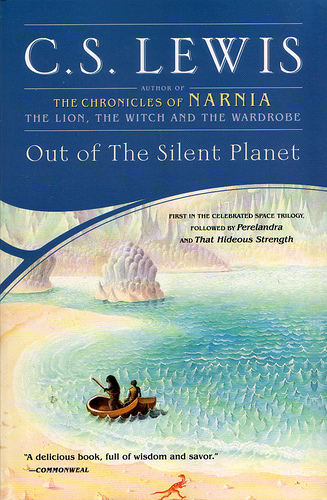
And then the mountains of essays. Firstly for the way they were written: clarity, precision, the mathematical dissection of the opposition's contention. If only we could all express ourselves that way. Secondly, the content: piercing, relevant, profound, memorable. And especially when communicating heaven and hell, and the profound simplicity of everyday life.
Of course the warnings about Lewis were also true: too often when encountering a problem in the Bible, he would process it via intellect much more than Scripture, and was prone to wandering off in some very odd directions.
But he could still write nonsense better than most true blue evangelicals can write truth.
And he gave me a sense of warmth in theological writing that seemed absent many other places (especially in my early days), and he said it was OK to have an imagination, and he taught me the power of story, and that the motif of redemption turns up everywhere. And, by accident, he taught me not to put my Bible down and go off on my own. And if it were not for fear of cancer, I'd probably buy a pipe too.
Thursday, August 04, 2011
Instead of productivity
HT (see I said it) to Minty. Comments towards the end of an article on what to do when attempts at productivity are going wrong - I put these here to remind me someone said them when I'm doing the opposite:
You could:
You could:
- Re-examine your definition of productivity. Spending two hours reading a great book in a coffee shop could well be more productive than spending two hours staring at your computer screen. Taking care of your kids could be one of the most productive things you’ll do in your whole life.
- Plan some down-time. Take an afternoon off – or a whole weekend. If you plan ahead, you’ll have it to look forward to (and you’re more likely to actually hold yourself to it).
- Find leisure activities that you really enjoy. Sometimes, we get caught up in productivity – whether that’s at work or in the home – because we don’t really have anything else to do. Join a club, take up a new hobby, or plan a date night with your partner.
- Get away from it all. It can be hard to “switch off” from work at times. By getting physically away – to a different city or even a different country – you create a real break from your regular life.
Tuesday, August 02, 2011
Piper: Baptism in perspective
I think we need to teach our people the meaning of baptism and obey the Lord's commands to baptise converts (Matt.28:19), without elevating the doctrine to a primary one that would unduly cut us off from shared worship and ministry with others who share more important things with us.
Brothers, p135
Lucado: questions
When a person first asks you a question, are they just testing to see if you can be trusted?
Yes, a person's first question isn't really the question. Their first question is kind of like tossing the tennis ball into the air. It's a practice swing. They're just testing to see if I am listening to them or not.So I make a habit of following up the first question with a question of my own: "Can you give me an example of that? When did that last happen to you? What effect has that had on you?" When I do that, I find that I hear them better.If I answer too quickly, my odds of providing a good answer diminish. Sometimes people don't want an answer; they just want to be heard. They just need to get something off their chests.I heard a counselor once say, "Try to find the question behind the question." That's good advice for pastors. Even when people come at you and they're a bit antagonistic, I'll sometimes be so bold as to say, "Now, what's the question behind this question? What do you really want to talk about?"
Monday, August 01, 2011
Schaeffer: the church exhibiting God
Ever since the fall rebellious man has been this way. And the Church is called out of this humanity, in order to be humanity before a lost humanity...
It is not only that the individual should so think and live, but the whole group as a group should be attuned to living consciously, moment by moment, in the reality of the supernatural. Then there is the exhibition; then there is the result there should be.
The Church should represent the supernaturally restored human race in reality, and as such it is very obvious
that there must be the proper legal circle of those in the Church in distinction to those not in it.
The matter of the proper legal circle, the battle against false doctrine and sin, will never come to an end in this life. But the proper legal relationship, while right in itself, should be only the vestibule to the reality of a living, personal relationship, first the group with God and then between those who are in the Church. Really to glorify God, to enjoy him, and to exhibit him, can never be mechanical and can never be only legal, but personal. When the Church of Christ functions on less than the personal level, it is exhibiting less than what God is, and therefore it is less than the Church should be. There should be an exhibition of redeemed human personal relationships.
TS, p146-148
Schaeffer: divorce
Modern multiple divorce is rooted in the fact that many are seeking in human relationships what human relationships can never give.
TS, p142
Schaeffer: value and apologies
So it is not such a low door after all, because all it involves is being willing to admit our equality with the one we have hurt. Being his equal it is perfectly right that I should want to say, "I am sorry." Only a desire to be superior makes me afraid to confess and apologize.
If I am living in a real relationship with the Trinity, my human relationships become more important in one way, because I see the real value of man, but less important in another way because I do not need to be God in these relationships any longer. So now I can go up to a man and say, "I am sorry for such and such specific harm I have done you," without smashing the integration point of my universe, because it is no longer myself, but God.
TS, p139-40
Schaeffer: love the individual
...every time I come into a place of eminence of office, I am to do it with trembling because I must understand from the word of God that eventually I will give account of my stewardship, not only in regard to my proper legal relationships but on the basis of my personal relationships.
One of the problem with humanists is that they tend to "love" humanity as a whole - Man with a capital M, man as an idea - but forget about man as individual, as a person. Christianity is not to love in abstraction, but to love the individual who stands before me in a person-to-person relationship.
TS, p138
Friday, July 29, 2011
Franzen: controllable extension of self
To speak more generally, the ultimate goal of technology, the telos of techne, is to replace a natural world that's indifferent to our wishes — a world of hurricanes and hardships and breakable hearts, a world of resistance — with a world so responsive to our wishes as to be, effectively, a mere extension of the self.
NY Mag
Facebook and Guttenberg
The shortcomings of social media would not bother me awfully if I did not suspect that Facebook friendship and Twitter chatter are displacing real rapport and real conversation, just as Gutenberg's device displaced remembering.
New York Magazine
Wednesday, July 27, 2011
Schaeffer: being right without crushing people
...if we as individual Christians, and as the church, act on less than a personal relationship to other men, where is the demonstration that God our Creator is personal?
...As Christians we are not to fellowship with false doctrine. But in the midst of the very battle against false teaching, we must not forget the proper personal relationship.
In the midst of being right, if self is exalted, my fellowship with God can be destroyed...
...how careful I must be, every time I see a situation where I am right and another man is wrong, not to use it as an excuse to scramble into a superior position over that man, rather than remembering the proper relationship of fellow creatures before God.
TS, p135-136
Friday, July 22, 2011
Lewis: how to be a Knight
The medieval knight brought together two things which have no natural tendency to gravitate toward one another. It brought them together for that very reason. It taught humility and forbearance to the great warrior because everyone knew by experience how much he usually needed that lesson. It demanded valour of the urbane and modest man because everyone knew that he was as likely as not to be a milksop.
Piper: repentance through beauty
So preaching that aims to produce true evangelical remorse and contrition must devote itself to making God and His holiness look alluringly attractive and satisfying, so that, by the grace of regeneration and illumination, people will come to love it so much that they feel intense remorse over falling short of it. In other words, we must preach for joy in the glory of God if we would produce true grief over falling short of the glory of God. Evangelical repentance is grounded in an appealing sight of the holiness of God. That is why I say, brothers, pursue their repentance through their pleasure.
Brothers... p125
Thursday, July 21, 2011
2 minutes of life
Marshall Shelley's son lived for 2 minutes, and he was left asking why God would create someone who only lived that long? At the end of the article he writes:
The apostle John's vision of eternity suggests what's in store for all the saints: "The throne of God and of the Lamb will be in the city, and his servants will serve him. They will see his face, and his name will be on their foreheads …. And they will reign forever and ever" (Rev. 22:3-5).I don't know exactly what our service in that city will involve, nor can I be specific about how we will assist in reigning. But those tasks sound like they may have a bit more significance than most careers we pursue in our current lifetime.Could it be that when I finally start the most significant service of my life, I'll find that this is what I was truly created for? I may find that the reason I was created was not for anything I accomplish on earth, but the role I'm to fulfill forever.I realized that my earlier question had been answered.Why did God create a child to live two minutes?He didn't.He didn't create Toby to live two minutes or Mandy to live two years. He didn't create me to live 40 years (or whatever number he may choose to extend my days in this world).God created Toby for eternity. He created each of us for eternity, where we may be surprised to find our true calling, which always seemed just out of reach here on earth.
Tuesday, July 19, 2011
Schaeffer: how not to crush a relationship
But when I am a creature in the presence of God, and I see that the last relationship is with an infinite God, and these human relationships are among equals, I can take from a human relationship what God meant it to provide, without putting the whole structure under an intolerable burden. More than this, when I acknowledge that none of us are perfect in this life, I can enjoy that which is beautiful in a relationship, without expecting it to be perfect.
But most of all, I must recognise that no human relationships are going to be finally sufficient. The finally sufficient relationship must be with God Himself.
TS, p134.
Thursday, July 14, 2011
Schaeffer: legalistic, subhuman evangelism
The command is to love Him, not just to think about Him or to do things for Him...Saying this we can see that much evangelism is not only sub-Christian, but subhuman - legalistic and impersonal.
TS, p133
Creative Leaders
The role of a creative leader is not to have all the ideas; it’s to create a culture where everyone can have ideas and feel that they’re valued. So it’s much more about creating climates. I think it’s a big shift for a lot of people.
Ken Robinson
(pinched from Mintie; or HT; or something; HP?)
Novels satisfy spiritual hunger
Rowling did not create the truth of the Eliade thesis, that novels satisfy a spiritual hunger in a secular culture. But her saga has confirmed it spectacularly. Harry Potter revealed rather than created the great spiritual hunger of our time. The publishing industry and Hollywood are responding to this by delivering stories that borrow Rowling's model. The industry simply cannot ignore the Potter-Twilight elephants in the accounting room.
CT
Scheaffer: God's attention
...because God is infinite he can deal with each one of us personally as though each one was the only man who existed...
Prayer is always to be seen as a person-to-person communication, not merely a devotional exercise. Indeed, when prayer becomes only a devotional exercise, it is no longer biblical prayer...
TS, p131 & 132
Wednesday, July 13, 2011
Schaeffer: a moment by moment person to person relationship
If I refuse my place as creature before the Creator and do not commit myself to Him for His use, this is sin. And anything else is also misery. How can you enjoy God on any other level than what you are, and in this present situation? Anything else will bring misery, a torturing of the poor, divided personality we are since the Fall. To live moment by moment through faith on the basis of the blood of Christ, in the power of the Holy Spirit is the only really integrated way to live. This is the only way to be at rest with myself, for only in this way am I not trying to carry what I cannot. To do otherwise is to throw away my own place of rest, the substantial psychological advance I as a Christian can have in this present life.
But present communion with God requires bowing in both the intellect and the will. Without bowing in the intellect, in thinking after God; without acting on the finished work of Christ in my present life; and without bowing in the will in practice, as the waves of the present life break over me, there is no sufficient communion with God. Without these things I am not in my place as the creature in a fallen and abnormal world. These three things are absolutely necessary if there is to be real and sufficient communion with God in the present life. In the proportion that these things are so, then a person-to-person relationship to God is in place...
TS, pp.129&130
Schaeffer: one integration point
The integration point is God Himself. It is possible even for Christians to put always more intellectual questions between them and the reality of communion with God. Even right doctrine can be the false integration point...
...And almost all modern liberal theology is just a game; it is pure gamesmanship...
TS, pp127-128
Monday, July 11, 2011
Schaeffer: a new start, integration, encompassing relationship
There is always the possibility of a truly new start within a totally rational framework. Thank God that there is always this possibility, upon the basis of the infinite value of the blood of Jesus Christ...
...When by the grace of God I think after God, I can have intellectual integration. I no longer have to play games of hide and seek with the facts that I dare not face...
And nothing less will integrate the whole me, because that is what I was made for: to love God with all my heart, soul, mind. Being in any other relationship is not enough. There are parts of me that are not encompassed by any other relationship.
TS, p126.
Schaeffer: we know what we are so no need for superiority or inferiority
...another area of conflict and tension: the area of feelings of superiority and inferiority in relationship to other people. Many of us move backwards and forwards between superiority and inferiority , almost like the swing of a pendulum...
...As a Christian I do not have to find my validity in my status, or by thinking myself above other men. My validity and my status are found in being before the God who is there...I can deal with them without fearing that if I limit my superiority, my value, my validity, and status will be totally lost...
...I know who I am. I am a creature. I see myself in the light of having been created by God and in the light of the true , historic fall. So I understand that this is what I am and what all other men are.
TS, pp125&126
...As a Christian I do not have to find my validity in my status, or by thinking myself above other men. My validity and my status are found in being before the God who is there...I can deal with them without fearing that if I limit my superiority, my value, my validity, and status will be totally lost...
...I know who I am. I am a creature. I see myself in the light of having been created by God and in the light of the true , historic fall. So I understand that this is what I am and what all other men are.
TS, pp125&126
Schaeffer: fear of the impersonal
But the solution for the Christian is that there never need be a fear of the impersonal, because the personal-infinite God is really there...
..."you do not have to be afraid because God is here." This is a profound truth, not just for children. Indeed it is the glory of the Christian faith that the little things are profound and the profound things are overwhelmingly simple.
TS, p123
Schaeffer: trying to carry the world
The basic psychological problem is trying to be what we are not, and trying to carry what we cannot carry. Most of all, is not being willing to be the creatures we are before the Creator...there is nothing complicated about it; he is squashed trying to bear what no one except God Himself can bear because only God is infinite...
...Since the Fall we have points of weakness. With some of us it tends to be physical; with some it tends to be psychological. If we carry what we cannot, the blowout will come and it will come at the place of our inherent weakness...We refuse to acknowledge the existence of God, or - even though acknowledging his existence intellectually - in practice we refuse to bow before Him in the midst of our moment by moment lives.
TS, p122
Schaeffer: avoiding psychological despair and smashed marriages
...we lose the 'substantially' [substantial healing] in beating ourselves to bits trying to be what we cannot be...I am not to set myself at the centre of the universe and insist that everything bend to the standards that I have set upon my own superiority. I am not to say "I must be thus," and if it is not thus, there is nothing but psychological despair. Some people are totally caught in this, but all of us have something of it within ourselves, swinging pendulum-like between conceit and despair.
This is not true only in the psychological area, of course; it is true in all relationships of life...married couples who refuse to have what they can have , because they have set for themselves a false standard of superiority. They have set up a romanticism, either on the romantic side of love or the physical side, and if their marriage does not measure up to their own standards of superiority, they smash everything to the ground...You suddenly see a marriage smashed - everything gone to bits, people walking away from each other, destroying something really beautiful and possible...
TS, p120
Schaeffer: real and psychological guilt
Then it is reasonably, truly, and objectively dealt with in Christ's infinite substitutionary work. Now I can say to my conscience, "Be still!" The real guilt is gone and I know that anything that is left is my psychological guilt. This can be faced, not i confusion, but to be seen as part of the misery of fallen man...
A very practical thing for ourselves and for those whom we would help is that it is not always possible to sort out true guilt from psychological guilt...When someone comes to you in a psychological storm, and he is really torn up, it is not only unreasonable but it is also cruel to ask him in every case to sort out what is true guilt and what is psychological guilt...
...My part is to function in what which is above the surface, and to ask God to help me to be honest. My part is to cry to God for the part of the iceberg that is above the surface and confess whatever I know is true guilt there, bringing it under the infinite, finished work of Jesus Christ...
TS pp115-117
Schaeffer: acting like God is there
How is it that psychologists who act as if God is there, but merely pragmatically, like Carl Gustav Jung, are able to help their patients to some degree? I think it is because that which really helps is always in the direction of what reality is...Not bowing, they do not acknowledge Him, and yet pragmatically they find they must act as if He is there.
TS, p115
Friday, July 08, 2011
Schaeffer: battle
True doctrine is an idea revealed by God in the Bible...and can be fed back through man's body into his thought-world and there acted upon. the battle for man is centrally in the world of thought...the spiritual battle, the loss of victory, is always in the thought-world.
TS, p108.
Schaeffer: communion is internal
...we must understand that the reality of communion with God, and loving God, must take place in the inward self...Even communication with men and women must be through the body into the area of the thought-world...a real, personal communication never remains external. It always goes back into the personality...Thus real communication with man and love of man centres in our thought-world. The results may be external, and the expression may be external, but the love is internal. the same is true in our love for God...
the facts of the gospel in the external world [are] carried through the medium of his body into the inner world of his thoughts, and there, inside himself, inside his thought-world, either his believing God on the basis of the content of the gospel or his calling God a liar....
TS, p106
the facts of the gospel in the external world [are] carried through the medium of his body into the inner world of his thoughts, and there, inside himself, inside his thought-world, either his believing God on the basis of the content of the gospel or his calling God a liar....
TS, p106
Schaeffer: internal & external greatness & awfullness
So this is where true spirituality in the Christian life rests: in the realm of my thought-life...
...the reverse of this: the blows of the battle from the external world of man fall upon me outwardly. The blows fall in many ways...All of them come upon me in the external world, but if they stayed in the external world of the body, as though it were a machine, they would being no tears to me. Instead they flow through my sense, my body, into that which I am in the thought-world. And as the blows come to my thought-world, I either say "Thank you" to God, as we have already considered, or I rebel against Him. In either case the result is soon seen in the external world...
...That is even after I am a Christian I can be a death-producing machine; though I have life, eternal life, if I yield myself to Satan instead of to Christ, I can be an instrument of death to this external world. How sublime to be a man, made in the image of God! But how sobering, that I can bring forth out of my thought-world into the external world either that which leads to life or that which produces death in other men.
TS, pp106-107
Schaeffer: thoughts and internal are central
Basically it is a matter of our thoughts. The external is the expression, the results. Moral battles are not won in the external world first. They are always a result flowing naturally from a cause, and the cause is in the internal world of one's thoughts [for out of the abundance of the heart the mouth speaketh - MT.12:34]
There are those who would make a distinction here and regard the "heart" as more than just thoughts, but even if one held this view, the important fact is simply that we are dealing with the internal world. What Jesus is saying is that if the internal condition is not right, one cannot bring forth proper results.
[MT.5:21-22 & 1JN.3:15 - anger and hate is murder]
So far we have taken three steps:
First: the internal is first;
Second: the internal causes the external;
Third: morally, the internal is central
TS, pp98-99
Schaeffer: acknowledging and saying thanks
[on being unable to see all our sin]
TS, p90,92
But whatever evil may be above the surface, the portion that we do comprehend is sin, and that portion must be taken with honesty before God who knows our whole being, and we must say to Him, "Father, I have sinned." There must be real sorrow for the sin that I know, that is above the surface of myself...
...if we have sinned, it is wonderful consciously to say, "Thank you for a completed work," after we have brought that specific sin under the finished work of Christ...
TS, p90,92
Schaeffer: walking with Him in His will
If we have sin in our lives, and we go on, and God does not put His hand in loving chastisement upon us, then we are not children of God. God loves us too much for that. He loves us tremendously. He loves us as adopted children.
...God the Father's chastening is to cause us to acknowledge that specific sin is sin...
...Christ is speaking as a true man, and He speaks the absolute reverse of Adam and Eve in the Garden of the Fall, when He says, "Not my will, but Thine be done." I, too, must say with meaningfulness, "Not my will but Thine be done," at the point of that specific sin; not just a general statement, "I want your will" but "I want your will in reference to this thing that I acknowledge to be sin."
If we say that we have fellowship with Him and walk in darkness, we lie, and do not the truth. (1John1:6)
There is no such thing as to continually walk in darkness and to have an open fellowship with Him who is only light and holiness. This is simply not possible...
Here is something that is the antithesis not only of God's external law, but of His Character and what he is. How can we say we have fellowship with Him if we deliberately walk in that which is the antithesis of Himself?
TS, pp88-89
Schaeffer: sin obscures relationship
For some reason my moment-by-moment belief in God falters - a fondness for some specific sin has caused me at that point not to draw in faith upon the fact of a restored relationship with the Trinity. The reality of the practice of True Spirituality suddenly slips from me. I look up some morning, some afternoon, some night - and something is gone, something I have known; my quietness and peace are gone. It is not that I am lost again, because justification is once for all. But as far as man can see, or even I myself, at this point there is no exhibition of the victory of Christ upon the cross. Looking at me at this point, men would see not demonstration that God's creation of moral rational creatures is not a complete failure, or even that God exists. Because God still holds me fast, I do not have the separation of lostness, but I do have the separation from my Father in the parent-child relationship. And I remember what I had.
TS, p87.
Schaffer: sanctification is of Christ
To the extent that I am thinking about my sanctification, there is no real sanctification. I must see it always as Jesus Christ's.
...If I look to Jesus Christ and His victory for my entrance into a future heaven, dare I deny to him what that victory should produce in the battles of this present life - the battles before men and angels and the supernatural world? What an awful thought!
TS, p85&86
The Grand narrative and shaping life
To miss the grand narrative of Scripture is a serious matter; it is not simply a matter of misinterpreting parts of Scripture. It is a matter of being oblivious to which story is shaping our lives. Some story will shape our lives. When the bible is broken up into little bits and chunks - theological, devotional spiritual, moral, or worldview bits and chunks - then these bits can be nicely fitted into the reigning story of our own culture with all its idols! One can be theologically orthodox, devotionally pious, morally upright, or maybe even have one's worldview categories straight, and yet be shaped by the idolatrous Western story. The Bible loses its forceful and formative power by being absorbed into a more encompassing secular story.
Wolters & Goheen, quoted in Collins, Did Adam & Eve Really Exist?, p27
Lewis: books for grown ups (symbolism and imagery)
There is no need to be worried by facetious people who try to make the Christian hope of "Heaven" ridiculous by saying they do not want "to spend eternity playing harps" The answer to such people is that if they cannot understand books written for grown-ups, they should not talk about them. All the scriptural imagery (harps, crowns, gold, etc) is of course, a merely symbolical attempt to express the inexpressible. Musical instruments are mentioned because for many people (not all) music is the thing known in the present life which morst strongly suggests ecstasy and infinity. Crowns are mentioned to suggest the fact that those who are united with God in eternity share His splendour and power and joy, Gold is mentioned to suggest the timelessness of Heaven (gold does not rust) and the preciousness of it. People who take these symbols literally might as well think that when Christ told us to be like doves, He meant we were to lay eggs.
CSL, Mere Christianity, (quoted Collins Did Adam & Eve Really Exist? p18)
CSL, Mere Christianity, (quoted Collins Did Adam & Eve Really Exist? p18)
Schaeffer: the size God has made us
The reality of living by faith as though we were already dead, of living by faith in open communion with God, and then stepping back into the external world, as though we are already raised from the dead, this is not once for all, it is a matter of moment-by-moment faith, and living moment-by-moment. This morning's faith will never do for this noon...of noon for suppertime..of suppertime for going to bed...of midnight for the next morning. Thank God for the reality for which we were created, a moment-by-moment communication with God Himself. We should indeed be thankful because the moment-by-moment quality brings the whole thing to the size which we are, as God has made us.
...when we were created we were created for a purpose. And the purpose of creation, in which all our subsidiary purposes fit, is to be in a personal relationship to God, in communion with Him, in love, by choice, the creature before the Creator.
TS, pp.78-79
Schaeffer: moment by moment faith in Christ for life
So what is needed is the knowledge of the meaning of the work of Christ in our present life, for our present life, and then for us to act upon it in faith.
However, we may know the doctrine by mental assent without making the doctrine ours, and that is the other reason we do not bring forth the fruit we should. In the last analysis it is never doctrine alone that is important. It is always doctrine appropriated that counts...
If we are Christians, we have understood and acted upon the finished work of Christ once for all at our justification, and our guilt is gone forever. Now let us understand and act upon the practice of that same work moment by moment in our present lives...
So we must believe God's promises at this one moment in which we are. Consequently in believing God's promises we apply them - the present meaning of the work of Christ for the Christian - for and in this one moment. If you only can see that, everything changes. As we believe God for this moment, the Holy Spirit is not quenched. And through His agency, the risen and glorified Christ, as the Bridegroom of the bride, the Vine, brings forth His fruit through us at this moment. This is the practice of active passivity. And it is the only way anybody can live; there is no other way to live but moment by moment.
TS, pp76-77.
Schaeffer: oceans and orchards and vineyards wait
The Holy Spirit is the agent of the whole Trinity. He is the agent of the crucified, raised, the glorified Christ. If I am bringing forth something other than the fruit of the Spirit, the only reason is that I have grieved the Holy Spirit who is our divine guest....
...when we grieve Him, we push aside the one who is the agent to us of the work of Christ for our present life. On the basis of the finished, passive work of Christ - that is, His suffering on the cross - and on the basis of the active obedience of Christ - that is, keeping the law perfectly through His life - the fruits are there. They are there to flow out through the agency of the Holy Spirit through us to the external world. The fruits are normal; not to have them is not to have the Christian life which should be considered usual. There are oceans of grace that wait. Orchard upon orchard waits, vineyard upon vineyard waits. There is only one reason why they do not flow out through the Christian's life, and that is the instrumentality of faith is not being used. This is to quench the Holy Spirit. When we sin in this sense, we sin twice: we sin in the sin, and this is terrible, as it is against the law and character of God Himself, our Father; but at the same time we sin by omission, because we have not raised the empty hands of faith for the gift that is there.
In the light of the structure of the total universe, In the light of our calling to exhibit the existence and character of God between the Ascension and the Second Coming, In the light of the terrible price f the cross, whereby all the present and future benefits of salvation were purchased on our behalf - In the light of all this, the real sin of the Christian is not to possess his possessions by faith. This is the real sin.
TS, pp74-75 (boldface mine)
Schaeffer: unfaithful fruit
[Romans 6:14-21]
TS, p73
This passage points out our high calling, to put ourselves by choice in the arms of our rightful lover, our bridegroom, in order to bring forth his fruit in the external world. But it also warns us that it is possible, even after we are Christians, to put ourselves into the arms of someone else and bring forth his fruit in the world....if I....am not bringing forth the fruit that one would expect, the fruit of Christ, there is spiritual unfaithfulness on my part...so the word faithless has a very pointed meaning. If I do not have faith toward Christ, I am unfaithful toward him, and this is faithlessness.
TS, p73
Thursday, July 07, 2011
Schaeffer: through faith
On the basis of the finished work of Christ, a moment by moment life of faith is "the victory"...
There is the same base (Christ's work) and the same instrument (faith); the only difference is that one [justification] is once-for-all and the other is moment-by-moment. The whole unity of biblical teaching stands solid at this place. If we try to live the Christian life in our own strength we will have sorrow, but if we live in this way, we will not only serve the Lord, but in the place of sorrow He will be our song. That is the difference. The how of the Christian life is the power of the crucified and risen Lord, through the agency of the indwelling Holy Spirit, by faith, moment by moment.
"Now may the God of hope fill you with all joy and peace in believing, that ye may abound in hope, through the power of the Holy Spirit (Romans 15:13). This is our calling, through the agency of the Holy Spirit. We are not called to serve God just any way, but to know joy and peace in believing.
TS, pp70-71.
Schaeffer: geunine communication with God
..."What is the purpose of man - if man has any purpose?" And to that question the 20th century returns a great silence. But the Bible says man has the purpose of loving God with all his heart, and with all his soul, and with all his mind. And this "loving" is not meant to be vague or "religious", in the modern sense, but a genuine communication with God: the finite person, thinking and acting and feeling, being in relationship with the infinite - not a bare infinite, but an infinite who is a personal God, and therefore communication is possible...
Thus now, in the present life, if I am justified, I am in a personal relationship with each of the members of the Trinity. God the Father is my Father; I am in union with the Son; and I am indwelt by the Holy Spirit. This is not just meant to be doctrinal; it is what I have now.
TS, pp.67&69
Schaeffer: our purpose
God has always intended that Christians should be the evidence, the demonstration, of Christ's victory on the cross...Whatever is not an exhibition that God exists misses the whole purpose of the Christian's life now on earth...
TS, p63-64
Schaeffer: it must be experiential
[re 1Corinthians 2:4]
TS, pp61&62
What Paul is saying here is that the preaching of the gospel to simple or more "complicated" men fails in both cases if it does not include a demonstration of the Christian life, if it does not include the work of the Holy Spirit...
...Doctrine is important, but it is not an end in itself. There is to be an experiential reality, moment by moment...
This experiential result, however, is not just a bare experience of supernaturalism, without content, without our being able to describe and communicate it. It is a much more. It is a moment by moment, increasing, experiential relationship to Christ and the whole Trinity. The doors are open now - the intellectual doors, and also the doors to reality.
In the light of the unity of the Bible's teaching in regard to the supernatural nature of the universe, the how is the power of the crucified and the risen Christ, through the agency of the indwelling Holy Spirit, by faith.
TS, pp61&62
Schaeffer: the supernatural is here
From the Christian viewpoint, no man has ever been so naive, nor so ignorant of the universe, as 20th century man...
The Christian life means living in the two halves of reality: the supernatural and the natural parts. I would suggest that it is perfectly possible for a Christian to be so infiltrated by 20th century thinking that he lives most of his life as though the supernatural were not there. Indeed I would suggest all of us do this to some extent...Nothing could be further from the Biblical view. Being a Christian means living in the supernatural now - not only theoretically but in practice...
...this is the emphasis of Scripture, that the supernatural world is not far off, but very, very close indeed.
[re Genesis 32:1-2]
The Hebrew name "Mahanaim" means "two hosts" or "two camps". And one camp is as real as the other. One is not a shadow and fiction, a product of Jacob's mind...
[re 2Kings 6:16&17]
The only difference was that the young man's eyes had to be opened to see what Elisha already saw. The supernatural was not something far off, it was there...
[re 1Corinthians 4:9 and "spectacle to angels"]
It's the idea of theatre; we are on a stage being observed. He says here that the supernatural universe is not far off, and that while the real battle is in the heavenlies, our part is not unimportant at all, because it is being observed by the unseen world. It is a like a one-way mirror. We are under observation.
TS, pp.54-60
Schaeffer: life in a supernatural universe
[naturalistic thinking creeps in easily...]
[but when we consciously live within the Biblical understanding of supernatural reality:]
TS, pp.54&56
As soon as this happens, Christians begin to lose the reality of their Christian lives...
...we have said that we are to love God enough to say "Thank you," even for the difficult things. We must immediately understand, as we say this, that this has no meaning whatsoever unless we live in a personal universe in which there is a personal God who objectively exists.
[but when we consciously live within the Biblical understanding of supernatural reality:]
...the teaching that Christ is the bridegroom will bring forth fruit through me, ceases to be strange. The Bible insists that we live in reality in a supernatural universe...
The true Bible believing Christian is the one who lives in practice in this supernatural world.
TS, pp.54&56
Flywheel & Doomloop
Now picture a huge, heavy flywheel. It’s a massive, metal disk mounted horizontally on an axle. It's about 100 feet in diameter, 10 feet thick, and it weighs about 25 tons. That flywheel is your company. Your job is to get that flywheel to move as fast as possible, because momentum—mass times velocity—is what will generate superior economic results over time.
Right now, the flywheel is at a standstill. To get it moving, you make a tremendous effort. You push with all your might, and finally you get the flywheel to inch forward. After two or three days of sustained effort, you get the flywheel to complete one entire turn. You keep pushing, and the flywheel begins to move a bit faster. It takes a lot of work, but at last the flywheel makes a second rotation. You keep pushing steadily. It makes three turns, four turns, five, six. With each turn, it moves faster, and then—at some point, you can’'t say exactly when—you break through. The momentum of the heavy wheel kicks in your favor. It spins faster and faster, with its own weight propelling it. You aren't pushing any harder, but the flywheel is accelerating, its momentum building, its speed increasing.
This is the Flywheel Effect. It's what it feels like when you’re inside a company that makes the transition from good to great. Take Kroger, for example. How do you get a company with more than 50,000 people to embrace a new strategy that will eventually change every aspect of every grocery store? You don’t. At least not with one big change program.
Instead, you put your shoulder to the flywheel. That’s what Jim Herring, the leader who initiated the transformation of Kroger, told us. He stayed away from change programs and motivational stunts. He and his team began turning the flywheel gradually, consistently—building tangible evidence that their plans made sense and would deliver results.
“We presented what we were doing in such a way that people saw our accomplishments,”Herring says. “We tried to bring our plans to successful conclusions step by step, so that the mass of people would gain confidence from the successes, not just the words.”
Think about it for one minute. Why do most overhyped change programs ultimately fail? Because they lack accountability, they fail to achieve credibility, and they have no authenticity. It’s the opposite of the Flywheel Effect; it's the Doom Loop.
Companies that fall into the Doom Loop genuinely want to effect change—but they lack the quiet discipline that produces the Flywheel Effect. Instead, they launch change programs with huge fanfare, hoping to “enlist the troops.” They start down one path, only to change direction. After years of lurching back and forth, these companies discover that they’ve failed to build any sustained momentum. Instead of turning the flywheel, they've fallen into a Doom Loop: Disappointing results lead to reaction without understanding, which leads to a new direction—a new leader, a new program—which leads to no momentum, which leads to disappointing results. It’s a steady, downward spiral. Those who have experienced a Doom Loop know how it drains the spirit right out of a company.
Jim Collins
Keller: on Sandel - 'pro-choice' is not morally neutral
Sandel...says that the most familiar liberal argument for abortion rights "claims to resolve the abortion question on the basis of neutrality and freedom of choice, without entering into the moral and religious controversy." Abortion rights supporters charge that their pro-life opponents are trying to impose a particular set of moral and religious views on society but that pro-choice people are not. They are simply arguing for freedom of choice. Sandel retorts:
"But this argument does not succeed. For if it's true that the developing fetus is morally equivalent to a child, then abortion is morally equivalent to infanticide. And few would maintain that government should let parents decide for themselves whether to kill their children. So the "pro-choice" position on the abortion debate is not really neutral on the underlying moral and theological question; it implicitly rests on the assumption that the Catholic Church's teaching on the moral status of the fetus...is false."
...the case for permitting abortion is no more neutral than the case for banning it. Both positions presupposesome answer to the underlying moral and religious controversy.
Generous Justice, p157-158
Schaeffer: the 'how'
If we are to bring forth fruit in the Christian life, or rather, if Christ is to bring forth this fruit through us by the agency of the Holy Spirit, there must be a constant act of faith, of thinking: Upon the basis of your promises I am looking for you to fulfil them, O my Jesus Christ; bring forth your fruit through me into this poor world.
So now we stand before two streams of reality: those who died and are with Christ now; and we, who have the earnest of the Holy Spirit now and so, upon the reality of the finished work of Christ, have access - not in theory, but in reality - to the power of the crucified, risen, and glorified Christ, by the agency of the Holy Spirit.
True spirituality is not achieved in our own energy. The "how" of the kind of life we have spoken of, the true Christian life, true spirituality, is Romans 6:11 "Reckon ye also yourselves [there is the faith; then the negative aspect] to be dead indeed unto sin, [but then the positive] but alive unto God through Jesus Christ our Lord." This is the "how" and there is no other. It is the power of the crucified, risen, and glorified Christ, through the agency of the Holy Spirit by faith.
TS, p53.
Schaeffer: the agent of the whole Trinity
In Romans 1-8 at the end of the section on the development of the Christian's sanctification, the work of the Holy Spirit, the agent of the whole Trinity, is brought into full force in the eighth chapter. In Romans 8:13 this is drawn together in this great central chapter of the work of the Holy Spirit to and for the Christian: "For [because] if you live after the flesh ye shall die; but if ye through the Spirit do mortify the deeds of the body, ye shall live." The Holy Spirit is specifically introduced to us here as the agent of the power and the person of the glorified Christ...
...we find in the early church not a group if strong men labouring together, but the work of the Holy Spirit bringing to them the power of the crucified and glorified Christ. It must also be for us.
TS, p51 (boldface mine)
Subscribe to:
Posts (Atom)