Monday, December 20, 2010

Nick's Carol verse 1


To thee dear readers
(yes, to both of you)
This apology is sent,
For despite the haste in writing
This tale is carefully meant.

It must be done by Christmas
So was written at some speed
And so please forgive the edits
It desperately will need.

The Masked Badger aka Bernard Dweeb 


Nick sat on the edge of the bed, in the semi-darkness of his own special room.  The cushioning movement of the mattress was inviting but the creaking and sagging under his considerable weight was alarming, so he sat very still for a moment and just sighed.  This time of year he slept alone, and in all honesty on this particular night he was quite relieved at not having to talk.  He just wanted sleep, now and badly, and he could only afford a few hours before starting work again. 

It was tricky pushing off first one boot and then the other using only his feet, but there was no way he was going to risk bending down, for both his sake and the bed’s.  He had hung his coat on the bedpost, but was there any point in taking anything else off?  Not really: he would hardly be asleep long enough, and he’d be wearing these trousers for the next forty eight hours anyway, so a few hours in bed would make little difference.  They’d be fine, he thought, as he pivoted round, raised his legs onto the bed and flopped backwards.  The bed made a sound suggesting that, although it had been holding its breath at the sight of the approaching mass, it was now wheezing its last, accompanied by a sound similar to someone cutting a taut piano wire.  Nick lay still for a moment, but the bed, the floor, gravity and Newton, all seemed to be holding a truce, and he relaxed, staring dreamily at the shifting shadows on the ceiling.  Outside, the moonlight was sparkling on the ice, and inside the ceiling looked like a monochrome reflection of a babbling stream.  He watched the shimmering light, moving his eyes across the ceiling and down the wall, until the strobing disappeared behind the dark hillock of his own belly.  He gave it a quick jiggle, just to make sure he could, and shut his eyes.  A thrity-six hour shift in the workshop had taken its toll and although his eyes ached with the strain, and the noise of the nightshift just reached the edges of his perception, he was soon asleep.

And then he was awake. Suddenly, and he didn’t know why.  A noise, somewhere, or a song or maybe a word.  Something...

There it was again!  But no song; instead a shuffling, a dragging, and with it a tinkling, a clanking.  It was drawing closer, along the corridor towards his door.  No one should be out there at this time of night, not on this night!  Nick’s sleepy mind was suddenly back online.  The proximity of the bizarre sounds suggested that whatever was making it was now merely a few steps from his room. Where was security?  The Gate-Elves knew no one was allowed anywhere near this corridor, let alone his door.  But it transpired that the door was irrelevant, as first a hand, followed by its arm, a torso, and then the whole figure of a man passed through as though nothing physical stood in its way.  Given the relative transparency of the man stood before him, eyes shining in the night, it was the man and not the door that had loosened its relationship with physicality.  Nick’s hand, which had been on its way towards the panic-button under his pillow (there had been time when ‘fans’ had come a little too close for comfort with regards to infiltrating the secret base) slipped away as, at a subconscious level, he realised two things:

First, it was probably pointless in dealing with a man that can walk through walls.

Second, he recognised the figure before him.

By now, Nick was upright on the edge of the bed staring at the unnerving form before him – through whom he could still just make out the panelling of the door.  Although the details were necessarily hazy, he registered the long brown, worn, robe; the sandals protruding from its ragged hem; the balding dome, with incongruously well-kempt hair over the ears, flowing seamlessly into a long, grey, beard.  Well, incongruous for a ghost, but to be fair he had always looked smart in his actual allotted lifetime.  Hanging low on his chest was a simple cross of grey metal, and in his left hand a small, bulging hessian sack, the source of the tinkling and clanking.

“Oh, really?”, said Nick, fear momentarily suppressed by recognition and the long-entrenched need to keep the upper hand when dealing with trouble.  “The bag and everything?”

The spectre remained impassive, but his mouth opened and instead of the dry, dusty and distant voice Nick had been expecting (he’d read plenty of books, he knew how this ought to go) came the same deep voice, which had always seemed so comforting.  Tonight, not so much.

“Are you really in any position to criticise the exploitation of  the symbolism of legend?”

Uh oh, he could see which way this was going.

“Don’t start on me. We went through this over 1500 years ago.  It’s not going to change anything tonight.”

“It doesn’t trouble you, that I have returned from Beyond to visit you tonight, of all nights?”

“I live at the North Pole without freezing, in a citadel shrouded by invisibility, surrounded by magical elves and singing penguins.  Exactly how disoriented were you expecting me to be?”  This was all true, but was also masking a deep inner sense of unease that threatened to spill over into an anxiety that something fundamental to his life was coming under threat.  “And it’s hardly original, is it Nicholas?  And where’s your bit of cloth to keep your jaw shut?  You missed it.”

“The trappings of death are unnecessary where I have come from.”  For a moment the gauzy shape took on a rich glow, which then faded.  All of this troubled Nick more than the previous few minutes.

Nicholas continued, “I know that the way things have developed were often beyond your control. But you have such resources, such power – and what do you do with it?  You’ve lost your way. You have forgotten...”

“Oh I see, we’re going to have some lessons in the TMOC, like I haven’t heard them a thousand times before.”

“I’m not sure you would recognise the TMOC anymore, not if it bit you.  You will be visited tonight by three Guides...”

“You have got to be joking – “

“Three visitors, and they will deal with you.  Watch for the first at midnight.”

Nick opened his eyes.  He was lying in bed.  The ceiling was flickering as usual.  He looked at the door – no one there.   He realised he’d been holding his breath for some time, exhaled quietly, and started breathing regularly.   Why tonight of all nights, on Eve’s Eve, would he dream of someone he hadn’t seen in centuries,  dead and buried a hundred generations ago?  He was part of the past, not the present, in more ways than one.  He had no right turning up in his dreams that way, not tonight.  Him, with his dogmatic commitment to ethereal hopes, to living forever, now fifteen hundred years six-feet in the ground, dead, dead as a doorna-  no, don’t say that.  And the bag of gold, what was that about?   No one believed the chucking coins in chimneys stuff. 

Overwork and too much adrenalin.  Penguin coffee.  That was the problem.

A bell began to strike midnight.  Nick went rigid, eyes staring at the ceiling.  It wasn’t just the dream that gave the bell an ominous sound - he didn’t own a clock.  Clocks were a pretty vague concept in a place where the only regular event was annual;  the nearest was a quarter of a mile away, and it didn’t have a bell. It had a big flower in the centre of the dial, which unfolded, and a clockwork fairy popped out and said “PoopPoop!”  There was no clock.

But the bell of the clock that wasn’t there continued to toll.  Nine...ten...eleven...twelve...


Copyright The Masked Badger 2010

Thursday, December 16, 2010

No rant without input

Nathan Foster describes how his cynicism about church changed direction:

Somewhere amid the wind and snow of the Continental Divide, I decided that if I'm not willing to be an agent of change [in the church], my critique is a waste … . Regardless of how it is defined, I was learning that the church was simply a collection of broken people recklessly loved by God … . Jesus said he came for the sick, not the healthy, and certainly our churches reflect that.

Luther: the first commandment

We ought to mark with what great diligence and ability Moses handles the first commandment, and explains it.  He was doubtless, an excellent doctor.  David afterwards was a gate or a door out of Moses.  For he had well studied in Moses, and so he became a fine poet and orator;  the Psalms are altogether syllogisms or concluding sentences out of the first commandment. Major, the first, is God's word itself; Minor, the second, faith.  The conclusion is the act, work and execution, so that it is done, as we believe.

When we believe the first commandment, and so please God, then all our actions are pleasing unto Him.

Tabletalk 270

Sunday, December 12, 2010

Bad habits

Indeed, a bad habit is the last thing that most of us are afraid of. We think that we are acting always from our own choice, that it is no matter what we do now, because another time, whenever we wish, we can do differently. But all the while a certain habit is forming and hardening, until at last we find ourselves almost helpless. Thus, even our tastes, our amusements, our selection of books, the tendency even of our most secret thoughts, are becoming fixed, and we are becoming permanently the persons we meant to be only for the moment.
Charles Carroll Everett
From here.

Friday, December 03, 2010

Wright: priests and ministers

[Romans 15:6] ...is a remarkable statement since it is the only place in the NT where anyone speaks of their own ministry in priestly terms.  Priesthood is either affirmed of Jesus, our great High Priest, or of the whole Christian community collectively (1PT 2:9).  Priestly imagery is  never used of ministry within the church, but Paul here uses it of his evangelistic ministry to the nations.

The Mission of God, p525

Maybe...

Maybe the true of attraction of secularism for some is that it provides a convenient cover when one does not want to be seen as unfair or intolerant.  I mean, for those who actually fear Christianity or are disgusted by it, a cloak of secularist philosophy projects the illusion of wisdom and neutrality whilst suggesting no one of any other persuasion possesses those virtues.

Tuesday, November 23, 2010

Vindication

Another thing that distracts us is the lust of vindication. St. Augustine prayed - "O Lord, deliver me from this lust of always vindicating myself." That temper of mind destroys the soul's faith in God. "I must explain myself; I must get people to understand." 

Utmost 23rd November

Thursday, November 18, 2010

#1.....

To be fair, if I could only take one album to a desert island it would be one with words to keep me encouraged - but that aside, assuming I was perpetually in good spirits then I think there is one album which has, for me, remained a constant companion for over 20years and just reaches those parts other albums can't reach.

Now, I know (as my wife tells me) the appeal for this kind of thing is idiosyncratic to me and the synesthesia, but this is it (cover by David Bailey):


After Tubular Bells, Oldfield was crushed by the tidal wave of global attention foisted on his already fragile psyche.  Retreating to the wilds of Herefordshire (oh my missed chance to climb it -) he produced Hergest Ridge, because he was contractually obliged to create a sequel.  His heart wasn't in it, and although many of us devotees feel it is a much neglected gem, it really wasn't a labour of love.  He chucked it at Virgin and retreated...only to be stung by the critical response: dubbed son of Tubular Bells (its structure whilst more minimalist is pretty much the same) it was an opportunity for the press to put down the new 'maestro'.

On the whole, for us muso's, this was a good thing - he knew he had much more to give and he set out to prove it to them.  And prove it he did (IMHO) - for many fans this is the ultimate Oldfield work:  a fully developed set of themes, beautifully played, incorporating what would become common fare 15 years later in 'world music' (African musicians, uillean pipes, his discovery of Lesley Penning and his recorders & whistles, with whom he had a hit in Indulce Jubilo) and a blistering guitar solo with what would become his trademark 'doublespeed' sound.  His mad overdubbing was taken to an extreme on side 2 (that's not an organ, that's thousands of guitars), plus his first song, On Horseback.  His creativity was back - including learning the harp to get the haunting sound to open.

It's pastoral, evocative, multilayered, rock, sound-painting at its best.  It's just too short.

The downside is good old Spotify have had to remove it for some reason, so below are the only online editions:  youtube videos, which sadly will produce 2 gaps where there shouldn't be any.  BUT just to let you know that Amazon have the original 1975 edition (not the new 2010 remix) at the ridiculous price (I hope this is true and not a misprint) of £1.99!

Hope I've got these right....
Part 1.1 http://www.youtube.com/watch?v=iJw_pu5_DbQ
Part 1.2 http://www.youtube.com/watch?v=CDal2p_zxIE&feature=fvst
Part 2.1 http://www.youtube.com/watch?v=Zol09q-AGMg&feature=related
Part 2.2 http://www.youtube.com/watch?v=c2UflUdryY8&feature=related

Tuesday, November 16, 2010

Stark: collapse of clergy

Constantine did not make Christianity the official religion of the Roman Empire, nor did he ban paganism.  That came later.  Constantine's "favour" was his decision to divert to Christians the massive state funding on which the pagan temples had always depended. Overnight, Christianity became "the most favoured recipient of the near limitless resources of imperial power" [consequently] the "privileges and exemptions granted  the Christian clergy precipitated a stampede into the priesthood" [quoting Richard Fletcher].

Stark p62

Stark: Constantine and volunteers

...just as the wave of Christianity was reaching tidal proportions, along cam Constantine.  Very soon thereafter the Christian mission subsided...

...in doing his best to preserve Christianity, Constantine destroyed its most vital aspect:  its dependence on mass volunteerism.

One True God, p.60-61

Friday, November 12, 2010

Gospel and productivity

It does come back to the tie between sound doctrine and right living. The point of William Wilberforce's book was not exhort people to change their behavior but to lay out what the gospel really is, the primary doctrines of Christianity. Sound doctrine causes joy, which is the fuel for obedience and love. I would say, that's the connection between the young restless reformed, who are loving these great doctrines, that creates joy which wants to have an outlet for doing good for our neighbor. Productivity practices are helpful tools to make us more effective in that. 

Matt Perman, CT Interview.

Monday, November 01, 2010

Authenticity & self-deception

In his invaluable book I Told Me So, Gregg Ten Elshof indicates that studies demonstrate that people over the age of 50 list competency as their most desirable trait in a leader, while college students list "authenticity." The difficulty, suggests Ten Elshof, is that when authenticity is the chief virtue, self-deception becomes the most egregious vice. But rather than eliminating self-deception, that ordering actually breeds it. As he argues, the cultural recognition and ascension of racism as a sin made it harder to admit to ourselves that we are racists. Similarly, when inauthenticity becomes the chief sin, it becomes that much harder to see it in ourselves.

Christianity Today

Woohoo! 500!


500!
From July 13th 2006 to November 1st 2010 = 500posts!  Gosh, and they said it would never last....with a generally steady upward curve in frequency of posting, but without getting carried away.  And I haven't once lost it behind the filing cabinet, as happened to  my old quote-book.

As usual on these occasions, thanks to Dickie Mint for getting me to do it;  it's been useful, harmless and fun.

Wednesday, October 27, 2010

#2 The Waiting

Well I had a bit of a disaster here, as I had forgotten this album which is, I think, a really great one.  However, I've decided to stay with what I had already chosen.


This is one of my favourite albums, but also I think probably the best Christian album I have.  Proper band who are Christians, who for the too few years they worked, did 200gigs a year.  Sadly, no more.  And in many ways subsequent albums never quite lived up to this one.

Anyway, what's so great about this?  Great ideas, themes pursued through, I think, great metaphors and poetry, a great sound ranging from delicate to grunge to folky to rock, and epic moments like Hands in the Air (which isn't about what the title suggests).  No cheese, no duff tracks.  Great stuff.

PS.  ooooooooooohhh!!!! ahhhhhhhhhh!  Looking for the image of their album cover I clicked a link and....THEY'RE BACK TOGETHER, new album next year!! AAAAAGAGHAHGHHHHHH!

Monday, October 25, 2010

CSL: nature emptied & filled

Just working on Ps.19 and remembered I'd read this last week, on how Christianity empties nature of gods...

But in another sense the same doctrine which empties Nature of her divinity also makes her an index, a symbol, a manifestation, of the Divine...[he then references Ps.19 & 36]...It is surely because the natural objects are no longer taken to be themselves divine that they can now be magnificent symbols of Divinity.  There is little point in comparing a sun-god with the Sun or Neptune with the great deep;  there is much in comparing the Law with the Sun or saying that God's judgements are an abyss and a mystery like the sea.

Reflections on the Psalms, p81

(I feel bound to note here, that this book of Lewis' is the least theologically helpful I have read (and I've read a lot) and is a reminder that we turn to Lewis not fir purity of theology but for brilliance of thought and expression)

Friday, October 22, 2010

Stark: missionary Judaism

As everyone knows, the OT teaches that Israel is God's Chosen People, and that this may have been the first significant instance of monotheism...What is far less known, and sometimes denied, is that the Judaism of this era was a missionising faith - probably the "first great missionary religion".

One True God, p52

Thursday, October 21, 2010

Ambition

I remember the older pastor asking me, when I was just starting out in ministry, "Where do you hope to be in twenty years?"
I was shocked by his question. Me? Oh I just hope to be servant-hearted enough to go wherever the bishop sends me. I just hope to be a good pastor who loves his people.
"Be careful son," the wise old man advised. "When you won't admit your ambition, you are setting yourself up for future disappointment when your unacknowledged, unsought ambitions are unrealized or when this sort of lying becomes routine." Ouch.

.......
From what I've seen, it's not necessarily a sin to be ambitious for a large salary, or lifelong job security, or a 40-hour work week. These aspirations are worthy goals. What's stupid is to be ambitious for these goals as a Christian pastor.
I write all this as a simple, Bible-believing country pastor who never intended to be a bishop, someone who just wanted to be used by Jesus for the good of other people.
Yeah, right.

Will Willimon, Leadership

Monday, October 18, 2010

Luther: original sin

Original sin, after regeneration, is like a wound that begins to heal;  though it be a wound, yet it is in course of healing, though it still runs and is sore.  So original sin remains in Christians until they die, yet itself is mortified and continually dying.  Its head is crushed in pieces so that it cannot condemn us.
Tabletalk #256

Wednesday, October 13, 2010

Stark: complex culture and monotheism

Stark discusses the assumptions of an evolutionary approach to religion, and along the way presents some challenges which I have already blogged.  He then confirms that developed monotheism does arise in more complex cultures, but then makes a very interesting exception:

Thus, although it remains significant that such a God is acknowledged in some  quite unsophisticated groups, fully developed dualistic monotheism is very uncommon and does only seem to appear in a more complex cultural context. Keep in mind, however, that the ancient Hebrews were far from being the most advanced society of their day.  Why them?  That remains one of the greatest of all historical questions - and one rather unlikely ever to be fully answered.

p40

Chambers: the surprising wilderness

We may have the vision of God and a very clear understanding of what God wants, and we start to do the thing, then comes something equivalent to the forty years in the wilderness, as if God had ignored the whole thing, and when we are thoroughly discouraged God comes back and revives the call, and we get the quaver in and say - "Oh, who am I?" We have to learn the first great stride of God - "I AM THAT I AM hath sent thee." We have to learn that our individual effort for God is an impertinence; our individuality is to be rendered incandescent by a personal relationship to God (see Matthew 3:17). We fix on the individual aspect of things; we have the vision - "This is what God wants me to do;" but we have not got into God's stride. If you are going through a time of discouragement, there is a big personal enlargement ahead.
Utmost, 13th October.

Sunday, October 10, 2010

Maxwell: change

The only thing certain about tomorrow is that it will be different from today  If you doubt that, consider this: My grandfather had a farm, my parents had a garden, and I've got a can opener!  It's a different world from what it was 20 years ago, and it will be different in another 20.  But the good news is that the world changes so fast that you couldn't stay wrong if you tried!

The Difference Maker,  p88

Thursday, October 07, 2010

Determination

Every morning (well, most mornings) I listen to my MP3 player whilst I walk.  The early morning walks were something I started doing twenty years ago at College, when I realised that, for me, early is bad.  I’m tired, muddled and, worst of all, my whole life usually looks like one, massive, dark thunderstorm of difficulty.  I’m discouraged and ready to give up before the day has started.  Over time I noticed that by 10am life was not so bleak, and concluded that some of my problem is the way I’m wired: mornings are pants.  But if my morning ‘funk’ (as they used to say) is wiring or chemicals or the like, then maybe there is a way to overcome it, to speed up the natural process. Get out, walk and shake up the wiring and chemicals.  It was a revolution.  Mornings will always be tough, but oh! the difference. 10am arrives much earlier.

The MP3 player was the next revelation: I could fill my head with something other than the dismal self-generated junk that, with malicious glee, awaited me every morning.  And so I have walked and listened most mornings for years. 

Today I walked and listened to something that, I hope, helps yet further.  It was an interview with an author whose book recorded the lives of a legendary, crack group of marines who were present in various key arenas during World War II.  He had interviewed several and when asked what one characteristic he discovered they all shared, he replied: determination, the decision to never quit.  For example, one who parachuted behind enemy lines had a faulty parachute; so he braced himself and hit the ground hard.  He survived but could not move his legs.  On being retrieved and transported to hospital it was discovered he had a broken disk, which presented him with the ‘golden ticket’:  no more war, he could go home conscience-free.  Instead he worked his way back to health and got himself back to the front to continue fighting with his unit.  There were other, similar stories.

Determination.  It was another one of those moments.  Not quitting is a decision.  Now, I’ve had plenty of times when I have worked towards a goal, or dug my heels in over an issue and refused to move, come what may.  But they have generally been over selected key issues, whose importance generated resolve. But what about those times when quitting seemed enforced by circumstance, when conditions robbed resolve and quitting did not seem so much a decision, but the aggregate effect of events?  Now this may not come as a new idea to you, but for the first time in my life I asked:  what if determination is not what you calculate having examined the odds, but is an ongoing attitude that we decide to have?  What about a daily decision to not quit, to not be cowed by circumstance?  The point the author was making was that these men were not simply determined to achieve a goal, they were simply determined.

For those of us who feel we fall short of World War II veterans and tend towards self-analysis, our problem may be that failure and/or a sense of inadequacy discourages us across the board, not just over the issue that produced it.  We look at the failure and conclude (consciously or otherwise) that we have failed/we’d better not try again/we don’t want to let people down another time/make ourselves vulnerable etc. Maybe from this comes a subconscious conclusion that determination only arises in situations where we can see ourselves reasonably clear to succeed. And this isn’t one of them.

But surely this is a policy of diminishing returns, precisely the opposite of our intention.  Such thinking robs us of confidence, motivation, clarity and energy. Or, to put it another way, it leads to nothing; because we tend to not try again, tend to increasingly assume we will fail; and not just here, where the problem occurred, but other times, places and circumstances. The fog across our vision here, drifts into every valley. 

So we need to stop.  And think.  Pulling into our shell seems to be a fitting consequence of failure – but in reality it is simply nothing.  It’s empty.  It achieves zero: it won’t help. Anything.  We feel that keeping quiet, or not trying again, will in some way protect us from the future;  but in fact that approach is just as likely to lead to the very consequences we are trying to avoid.  We shut down, and then fail to grasp opportunities, or feel listless – which then produces a further sense of failure.

Vicious circle.

Instead, take a look at those soldiers: determination, the decision to never quit.  Why not us too?  What’s the point of being cowed, looking down, not trying?  We need to view their results when they denied ‘failure’ the right to inhibit their energy, when they decided to learn their lesson and then forget the disaster, refusing to count it as a closed door.  Don’t get me wrong, there are situations where withdrawing is the only thing that will keep us in one piece.  But we need clarity, to realistically evaluate which ones those are, and not permit the effects to spread across our personality or every area of life.

Strangely, the commitment to get up again tomorrow and do what needs to be done, without being unduly dampened by the past, often quietens the sepulchral voices calling for retreat to the shadows. Those voices are the worst feature of withdrawal. When we make anaesthetising those voices our priority (through hiding in mediocrity, or pulling limbs into shells) they are still influencing us. But having determination as a priority, waking in the morning and deciding that not quitting is the top priority of the day, it transpires that  a considerable amount of energy was being parasitically drawn by the voices.  Paradoxically, redirecting energy to the more purposeful priority of determination can make us feel stronger.

#3 March

Well firstly, the ones that got away.  We're so close to the end that it's now pretty certain some albums I would have on this list are not going to get Spotifyed in time.  So if you get a chance, check these out somewhere else:

Transverse City by Warren Zevon - for an album describing the future, it gets a little dated by reference to contemporary 1980s events;  but as this disturbing 'future' is really now, that doesn't matter too much.
Some Kind of Wonderful - my favourite soundtrack is a blast of 1980s slightly left of centre tracks, from the master of teen soundtracks.
The Brendan Voyage - yes, a symphony for orchestra and uillean pipes.

but in the absence of those it's this one:


I saw the No Myth video on the telly, saw the album in the shop and brought home a really odd collection of songs.  catchy, fluent, but really I have no idea what's going on half the time.  The same poetical complexity as Suzanne Vega, but repeated listens don't necessarily show a co-ordinating theme, though there may be some.  And some songs, like Evenfall, are straightforward enough.  But the overall result for me has been a really compelling album from Penn (yep, Sean's brother, honest).  As he is so unknown these days, and after the hit of No Myth, disappeared from the charts, I have heard no more - but it looks like spotify has a few more avenues.

B the way, the Spotify March has several extra tracks I have never heard. the original album stops at Evenfall, which is a great ending and I would recommend stopping there for the time being.

Sunday, October 03, 2010

Flat Earth

The persistence of myth continues to amaze, as I was reading John Maxwell's helpful book The Difference Maker.  Once again, as so often, the illustration of Columbus was used to demonstrate how hard it is to accept change:  Columbus believes the earth is round, everyone else says it's flat;  he sails off, proves his thesis and yet it still takes a generation for this to permeate culture.

In fact Pythagorian thinking had influenced opinion since the 7thC BC, to such an extent that by the time of Columbus practically no one thought the earth was flat, and in fact most intellectuals had never believed this.  Columbus' argument was not about the shape of the world but how big it was and the location of Asia (neither of which he was correct about).

As these authors say:
Historians of science David Lindberg and Ronald Numbers point out that "there was scarcely a Christian scholar of the Middle Ages who did not acknowledge [Earth's] sphericity and even know its approximate circumference"

What's more interesting is the hint I came across today that the myth of the flat earth had an element of deliberateness to it, during the 19thC when fostering the impression of an eternal conflict between science and religion was seen as advantageous.

Historian Jeffrey Burton Russell says the flat earth error flourished most between 1870 and 1920, and had to do with the ideological setting created by struggles over evolution.

Washinton Irving's highly fictionalised account of Colombus' conflict with priests sank into the popular psyche.

In 1834, a few years after the publication of Irving's book, Jean Antoine Letronne, a French academic of strong antireligious ideas, misrepresented the church fathers and their medieval successors as believing in a  flat earth, in his On the Cosmographical Ideas of the Church Fathers.   Then, In 1837, the English philosopher of science William Whewell first identified, in his History of the Inductive Sciences, two minimally significant characters named Lactantius (245-325, also mocked by Copernicus' in De revolutionibus of 1543, as someone who speaks quite childishly about the Earth's shape, when he mocks those who declared that the Earth has the form of a globe) and Cosmas Indicopleustes, who wrote his "Christian Topography" in 547-549. Whewell pointed to them as evidence of a medieval belief in a Flat Earth, and other historians quickly followed him, even though it was hard to find other examples


Hmmm.....
(quotations from Wikipedia article 'Myth of the Flat Earth')

Tuesday, September 28, 2010

Defiant Barth

As hitler's party cam to power in 1933, Karl Barth wrote:

The decisive things which I seek to bring to these problems today is to carry on theology, and only theology, now as previously, and as if nothing had happened.

Maxwell: desire to change

The desire to change is the key to growth in all areas of life.  Ironically, most people desire improvement, yet at the same time they resist change.  The problem is that you cannot have one without the other.  Change is possible but only if you want it badly enough.

The Difference Maker, John Maxwell, p.49

Monday, September 27, 2010

Fab! Flying car

This is just great: Steve Saint's latest invention for aiding missions and relief work - a flying car!

Thursday, September 23, 2010

Wright: covenantal mission

Mission then, as articulated in the Great Commission, is the reflex of the new covenant.  Mission is an unavoidable imperative founded on the covenantal lordship  of Christ our King.  Its task is to produce self-replicating communities of covenantal obedience to Christ among the nations. And it is sustained by the covenantal promise of the perduring presence of Christ among his followers.

But we cannot stop short of the climactic vision of the whole of Scripture, the Book of Revelation.  Revelation is gloriously covenantal and presents the presence of God among His people as the crowning achievement of God's cosmic redemptive mission. Revelation 21-22, indeed, combines imagery from all the covenants of the Scriptures.

Noah is there in the vision of the new creation, a new heavens and a new earth after judgment.  Abraham is there in the ingathering and blessing of all nations from every tongue and language. Moses is there in the covenantal assertion that "they will be His people and God Himself will be with them and be their God," and "the dwelling of God is with men and He shall live with them".  David is there in the Holy City, the new Jerusalem, and in the identity of Jesus as the Lion of Judah and the Root of David.  And the New Covenant is there in the fact that all of this  will be accomplished by the blood of the Lamb who was slain.

p355-356.

Friday, September 17, 2010

#4...well it had to happen...

It was inevitable really, even though this has kind of appeared in a previous post in another (live) form.

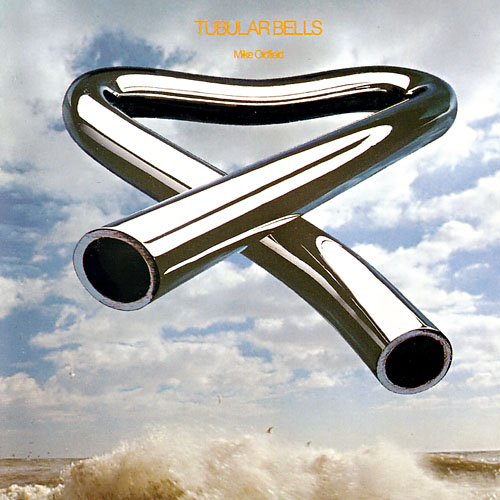
The album that launched both Oldfield and Branson, the latter became a millionaire and the former did OK but had a poor contract and then a breakdown as a result of the global fame.  TB was an ongoing project for the troubled teen, who would resort to his bedroom and hide in the music; sticking bits of card in an old tape recorder to make it a 4-track, he put together patchy demos - whilst supporting himself as a session player in other venues.  Branson liked it (and wanted to call it Breakfast in Bed, which says it all about Branson really) and allowed Oldfield use of the new Manor studio when all the proper bands had gone home.


When it was finished, well - what do you do with a two-track album?  John Peel played it and off it went to mega-selling status (it was still in the top 100 5 years later).  When you think that large parts of it were composed at 17 years of age, and many of the instruments were played by him...welllllll.   THE album of my mid-teens - soak it in.

Book and covers

People frequently ask me how many pages they should give a book before they give up on it. In response to that question, I came up with my “rule of fifty,”  which is based on the shortness of time and the immensity of the world of books.  If you’re fifty years of age or younger, give a book fifty pages before you decide to commit to reading it or give it up.  If you’re over fifty, which is when time gets even shorter, subtract your age from 100—the result is the number of pages you should read before making your decision to stay with it or quit.  Since that number gets smaller and smaller as we get older and older, our big reward is that when we turn 100, we can judge a book by its cover!
http://nancypearlbooks.wordpress.com/pearlisms/

Monday, September 13, 2010

Wright: obedient to both testaments

But where do we find any justification for imagining  that by rightly understanding what the NT commands us to do, we are absolved from what the OT commands?  Why should we imagine that doing evangelism in obedience to the NT excludes doing justice in obedience to the Old?  Why have we allowed what we call the Great Commission to obscure the twin challenge (endorsed by Jesus himself) of the Great Commandment?

The Mission of God, p.304

Friday, September 10, 2010

Questions on good and evil

To walk away from one's faith because of unanswered questions about evil is to walk into a storm of unanswered questions about good.
Ravi Zacharias

Monday, September 06, 2010

Separating out the good bits

There is, surely, a wise example to follow in Augustine's sage advice concerning Platonism, "separate these truths from their unfortunate associations, take them away, and put them to their proper use for the proclamation of the gospel." 

John Ross (ref 21)

Chambers: the river and the obstacle

A river is victoriously persistent, it overcomes all barriers. For a while it goes steadily on its course, then it comes to an obstacle and for a while it is baulked, but it soon makes a pathway round the obstacle. Or a river will drop out of sight for miles, and presently emerge again broader and grander than ever. You can see God using some lives, but into your life an obstacle has come and you do not seem to be of any use. Keep paying attention to the Source, and God will either take you round the obstacle or remove it. The river of the Spirit of God overcomes all obstacles. Never get your eyes on the obstacle or on the difficulty. The obstacle is a matter of indifference to the river which will flow steadily through you if you remember to keep right at the Source. Never allow anything to come between yourself and Jesus Christ, no emotion, or experience; nothing must keep you from the one great sovereign Source. 
Utmost,  Sep.6th

Thursday, August 26, 2010

Marriage changes

Just got round to reading this article from CT from a while back, and thought it was worth quoting at length - as it contains some interesting research on social consequences:

Same-sex marriage advocates frequently ask, "How would gay marriage affect your marriage?" The question is posed rhetorically, as if marriage is a private institution with no social consequences.
But The New York Times, of all papers, argues that gay unions could significantly alter marriage norms. A new study of gay couples in San Francisco shows that half are "open," meaning that partners consent to each other having sex with other people. The Times says that the prevalence of such relationships could "rewrite the traditional rules of matrimony" by showing straight couples that monogamy need not be a "central feature" of marriage and that sexually open relationships might "point the way for the survival of the institution."
In the gay community, open relationships are neither news nor controversial. Many of my partnered, gay male friends are in open relationships, some of which have lasted for decades. But the Times reporter, Scott James, who is himself gay, notes that nobody in an open relationship agreed to give their full name for the story, worrying that "discussing the subject could undermine the legal fight for same-sex marriage."
Indeed, some gay activists were upset with the Times. Gay political commentator Andrew Sullivan derided the piece and pointed to several critiques of the study. However, Sullivan himself has made the same argument, saying that gay male unions could "help strengthen and inform" traditional marriages.
"Among gay male relationships, the openness of the contract makes it more likely to survive than many heterosexual bonds …. There is more likely to be a greater understanding of the need for extramarital outlets between two men than between a man and a woman," he wrote in his book Virtually Normal.
Other same-sex marriage advocates say a legal change would transform the institution. New York University professor Judith Stacey, testifying before Congress against the Defense of Marriage Act, said changing the law to allow same-sex partners to marry would help "supplant the destructive sanctity of the family" and help it assume "varied, creative, and adaptive contours," including "small group marriages."
Activist Michelangelo Signorile wrote that gays should "demand the right to marry not as a way of adhering to society's moral codes but rather to debunk a myth and radically alter an archaic institution."
To be sure, some advocates of same-sex marriage hope that heterosexual marital norms of monogamy and fidelity would be transferred to same-sex unions. But since these norms are based on the ideal that marriage is the union of a man and woman making a permanent and exclusive commitment for the purpose of bearing and rearing children, it would be irrational to expect same-sex partners—whose sexual relations bear no risk of procreation—to share the same norms.
Whether or not marriage law should change, the fact is that changing it to include same-sex partnerships would teach people that marriage is fundamentally about the emotional union of adults and not primarily about the bodily union of man and wife (let alone the children who result from such a union). The norms of permanence, monogamy, and fidelity would make less sense under such a change.
Consider changes in divorce laws. The spread of no-fault divorce in the 1970s didn't just make it easier for men and women to get out of troubled marriages. It also changed people's ideas about the permanence of the institution and the responsibility parents have to their children.

It had other unintended consequences as well. Studies showed that after divorce laws were changed, spouses tended to invest less in their marriages. Economists found that spouses in states that had passed no-fault divorce laws were 10 percent less likely to put the spouse through college or graduate school and 6 percent less likely to have a child together.
Marriage rates fell and cohabitation rates increased as men and women lost confidence in the institution. Some 20 percent of children are now born to cohabiting couples, the majority of whom will see their parents split up by the time they reach adolescence.
Legal changes have consequences. But no matter how marriage laws may change, we can, paradoxically, find more freedom in chastity—which calls for abstinence when unmarried and sexual fidelity when married—than in any form of open marriage.
As Catholic author Christopher West says, "Chastity is first and foremost a great yes to the true meaning of sex, to the goodness of being created as male and female in the image of God. Chastity isn't repressive. It's totally liberating. It frees us from the tendency to use others for selfish gratification and enables us to love others as Christ loves us."
Copyright © 2010 Christianity Today
Mollie Ziegler Hemingway

Wednesday, August 25, 2010

Nouwen: balance

Let me paint a picture. You're in a big room with a six-inch balance beam in the center. The balance beam is only twelve inches off the fully carpeted floor. Most of us act as if we were blindfolded and trying to walk on that balance beam; we're afraid we'll fall off. But we don't realize we're only twelve inches off the floor. The spiritual director is someone who can push you off that balance beam and say, "See? It's okay. God still loves you. Take that nervousness about whether you're going to succeed and whether you have enough money — take the whole thing up on that narrow beam and just fall off."

Kindly sent by Minternational

Tuesday, August 24, 2010

Stark: Lang, Schmidt and the original religion

[leading on from a previous post from One True God]

One leading anthropologist did not reject Lang's work when it first appeared.  Father Wilhelm Schmidt (1868-1954)...asked himself, What if "the Supreme Being of primitive cultures really is the god of monotheism?"...In opposition to the conventional anthropological wisdom that the many similarities among religions show all religions to be nothing but "just so" stories of obvious human invention, Schmidt proposed that the striking similarities found in religions around the world exist because they derive from a universal revelation dating to earliest times...and although Schmidt's work is based on the theistic assumption, his conclusion is no more faith-based than that of his opponents, all of whom based their work on the atheistic assumption.
p.39&40

Monday, August 23, 2010

#5 Underdog

oooh, it's getting tough now.  There's too many things jostling for place here...it' very nearly Go by the Newsboys;  and it was going to be Take me to Your Leader by the Newsboys (one of the early "Oh Christians can play after all" albums- especially Breakfast which is a great song.  Please check it out.) 

But instead it's this:


which is a loud, boisterous album (well, like all Audio Adrenaline albums) with some touching moments.  And humour (the Houseplant Song).  I'm not aware of any deep overarching theme, and completely blank as to whether it was written during any profound moments.  It just needs some big speakers if possible.  Can't believe Underdog is 11 years old.

Saturday, August 14, 2010

Chambers: sanctification

Am I prepared to let God grip me by His power and do a work in me that is worthy of Himself? Sanctification is not my idea of what I want God to do for me; sanctification is God's idea of what He wants to do for me, and He has to get me into the attitude of mind and spirit where at any cost I will let Him sanctify me wholly.
Utmost, 14th August

Tuesday, August 10, 2010

Clergy health

A national survey in 2001 of more than 2,500 Christian religious leaders conducted by Duke Divinity School showed that 76 percent of Christian clergy were either overweight or obese, 15 percentage points higher than for the general U.S. population. And other research has shown that clergy across all faiths are succumbing to higher rates of obesity, hypertension, diabetes and other ailments than their congregants.

Pastor's Weekly Briefing Aug.6th 2010

Thursday, August 05, 2010

A good phrase for tourists

The pleasure steamers come and go, leaving a churning wake, and yachtsmen visit one another, and even the day-tripper, his dull eye surfeited with undigested beauty, ploughs in and out among the shallows...
Frenchman's Creek, Daphne du Maurier, p2 (emphasis mine)

The baffling Call

“And all things that are written by the prophets concerning the Son of Man shall be accomplished … And they understood none of these things.”
Luke 18:31,34
God called Jesus Christ to what seemed unmitigated disaster. Jesus Christ called His disciples to see Him put to death; He led every one of them to the place where their hearts were broken. Jesus Christ's life was an absolute failure from every standpoint but God's. But what seemed failure from man's standpoint was a tremendous triumph from God's, because God's purpose is never man's purpose.
There comes the baffling call of God in our lives also. The call of God can never be stated explicitly; it is implicit. The call of God is like the call of the sea, no one hears it but the one who has the nature of the sea in him. It cannot be stated definitely what the call of God is to, because His call is to be in comradeship with Himself for His own purposes, and the test is to believe that God knows what He is after. The things that happen do not happen by chance, they happen entirely in the decree of God. God is working out His purposes.
If we are in communion with God and recognize that He is taking us into His purposes, we shall no longer try to find out what His purposes are. As we go on in the Christian life it gets simpler, because we are less inclined to say - Now why did God allow this and that? Behind the whole thing lies the compelling of God. "There's a divinity that shapes our ends." A Christian is one who trusts the wits and the wisdom of God, and not his own wits. If we have a purpose of our own, it destroys the simplicity and the leisureliness which ought to characterize the children of God.
My Utmost, 5th August.

Wednesday, August 04, 2010

The muddiness of being English

And it is a legacy of the Normans that modern English has many words with similar meanings, as French words were assimilated into everyday language. The same goes for the long-standing association of all things French with the upper classes, and all things Anglo-Saxon with coarseness.
"Pig is English in origin, pork is French. Sheep is English, mutton is French. Cow is English, beef is French. When it's in a cold and muddy field covered in dung, it's named in English. When it's been cooked and carved and put on a table with a glass of wine, it's referred to in French."
(Robert Bartlett)

http://www.bbc.co.uk/news/magazine-10776581

Monday, July 26, 2010

Postman: the final quote (honest)

In the Huxleyan prophecy [Postman's central thesis is that Orwell's warnings may have come true in Russia, but in the west it's Huxley's] Big Brother does not watch us, by his choice.  We watch him by ours.
...what if there are no cries of anguish to be heard?  Who is prepared to take arms against a sea of amusements?

For in the end, he was trying to tell us that what afflicted the people in Brave New World was not that they were laughing instead of thinking, but that they did not know what they were laughing about and why they had stopped thinking.
p160&161&168

Postman: agitated amnesiacs

Television's Bill Moyers...says "I worry that my own business...helps to make this an anxious age of agitated amnesiacs...We Americans seem to know everything about the last 24 hours but very little of the last 60 centuries or 60 years"

A mirror records only what we are wearing today. It is silent about yesterday.  With television, we vault ourselves into a continuous, incoherent present.
p.140&141

Postman: books are living history (ooh!)

A book is all  history.  Everything about it takes one back in time - from the way it is produced to its linear mode of exposition to the fact that the past tense is the most comfortable form of address.  As no other medium before or since, the book promotes a sense of a coherent and usable past.  In a conversation of books, history, as Carlyle understood it, is not only a world but a living world.  It is the present which is shadowy.
p139

Postman: political image

For on television the politician does not so much offer the audience an image of himself, as offer himself as an image of his audience.
p137

Stark: Lang, degeneration of religion, and theology

No sooner had everyone accepted this claim, that the monotheistic religions had evolved from barbaric beginnings, than the evidence let them down.  Andrew Lang...surveyed the most recent and reliable ethnographic accounts of religion in the most primitive societies and concluded that many of these tribes believed in High Gods of the kind associated with monotheism.  The Making of Religion *1898) should have been a bolt from the blue...nevertheless his conclusion doomed his book to obscurity for a generation: since a substantial number f the most primitive societies believe in one high God, monotheism cannot always be the end product of a linear evolutionary process. Indeed, Lang argues, it is equally plausible that primitive forms of animism and ghost worship represent degeneration from earlier, purer forms of religion.

(Lang was later declared to be right, especially by a man called Radin - but Radin denied the possibility of degeneration of religion explaining animism etc;  Stark's explanation of this is illuminating:)

Radin's dismissal was not surprising since by then anthropologists had been made fully aware of the theological possibilities inherent in Lang's position.

One True God, p.38&39

Ortberg: well or fence?

If we focus on Jesus as the center, then the key question becomes whether someone is oriented toward him or away from him. We realize that God is in a much better position than we are to know who's in and who's out. We also realize that everyone has something to learn, that everyone has a next step to take, and we don't have to make ourselves seem more different than we really are. We embrace our common humanity.
Somebody wrote that in Australia there are two main methods for keeping cattle on the ranch. One is to build a fence around the perimeter. The other is to dig a well in the center of the property.
I think Jesus is more like a well than a fence.

Berry: wearily going back and forth

Uncle Burley said hills always looked blue when you were far away from them," Berry writes in the voice of title character Nathan Coulter. "That was a pretty color for hills; the little houses and barns and fields looked so neat and quiet tucked against them. It made you want to be close to them. But he said that when you got close they were like the hills you'd left, and when you looked back your own hills were blue and you wanted to go back again. He said he reckoned a man could wear himself out going back and forth.
Wendell Berry

Friday, July 23, 2010

#6 Graceland


This was my first real introduction to Paul Simon, which was a bit unfortunate as he never produced anything else that sounded like it.  It never really produced a big Paul Simon interest, but this album (originally pirated, then LP and finally bought on CD a million years ago) still gets played reasonably often.

So why?  I'm not sure. Mostly I had no idea what he was singing about, as it sounded very stream-of-consciousness, but it was a lot of fun.  And I think that's why: though there are serious tracks on here, mostly it has an unrelenting energy and boisterousness.  A lot of this is due to the township jive and zydeco and all that other South African stuff, which kind of sounds like rock'n'roll but just has so much more swing and gusto and vibrancy. And the complexity of the slippery lyrics.  Bright sunny days and warm, dark nights concentrated in two sides of vinyl.  Over to you Minty.

Thursday, July 22, 2010

Postman: advertising therapy

What the advertiser needs to know is not what is right about the product but what is wrong about the buyer.  And so, the balance of business expenditure shifts from product research to market  research. The television commercial has oriented business away from making products of value and towards making consumers feel valuable, which means that the business of business has now become pseudo-therapy. The consumer is a patient assured by psycho-dramas.
p131

Wednesday, July 21, 2010

Wright: the fall and idolatry

re. GEN.3:22

Not that humans have now become gods but they have chosen to act as though they were - defining and deciding for themselves what they will regard as good and evil.  Therein lies the root of all other forms of idolatry:  we deify our own capacities, and thereby make gods of ourselves and our choices and all their implications.  God then shrinks in horror from the prospect of human immortality and eternal life in such a fallen state and prevents access to the tree of life.  God has a better way to bring humanity, redeemed and cleansed, to eternal life.
p164

Monday, July 19, 2010

Two tech comments...

quotes lifted from John Dyer's blog:

Author Gary Shteyngart writes eloquently about his technological transformation, “With each post, each tap of the screen, each drag and click, I am becoming a different person — solitary where I was once gregarious; a content provider where I at least once imagined myself an artist; nervous and constantly updated where I once knew the world through sleepy, half-shut eyes; detail-oriented and productive where I once saw life float by like a gorgeously made documentary film. And, increasingly, irrevocably, I am a stranger to books, to the long-form text, to the pleasures of leaving myself and inhabiting the free-floating consciousness of another.”


Amazon's former Chief Scientist: “Why do people tweet? What is the driver of them spending time doing this? I think it’s because they think they have people giving them attention, and they do everything to play with that attention. The reason Twitter works so well is that they don’t have a feedback-loop, where people can realize just how little attention they’re getting. I’m not saying the system was set up that way deliberately, but it’s a very well setup system. People can fool themselves into believing that others are listening, which is not easy in real life. When you’re talking to other people on the street and nobody is listening, after a while you sort of have to stop talking. Not so on Twitter.”

Tripp: awe

Reflecting on Psalm 145:

Awe was meant to get you up in the morning and to give you rest at night.

Broken Down House, p221

Tripp: being and doing

A culture the has replaced identity in the Lord with identity in material things - the culture you and I live in every day - will always prize achievement, success and possessions over character.  In such a culture we will be so obsessed with what we want to do that we will have little time to consider who we should be. But here's the dilemma: unless we are what we are supposed to be, we cannot possibly do what we have been called to.
Broken Down House p215

Friday, July 16, 2010

Tripp: treasure war

As we read in Revelation the words of the celebrants on the other side, there is not a song of lament or a hymn of regret to be found.  There is only an endless celebration of the grace of the Lamb.  Why?  Because those who sing are no longer waging a treasure war.  Their values have finally been clarified, their hearts finally purified.  They now know that every investment they made in the things of God was fully and completely worth it.  they are satisfied, not because they got everything they wanted in this life, but because God accomplished everything He promised.
Broken Down House, p213

Monday, July 12, 2010

Keller: paraphrase Romans 8:28

God will always give you what you would have asked for if you knew everything He knows.

Tripp: waiting

Theoretical faith is always easier than practical, functional faith, and when we're faced with the challenge of waiting it can be disturbing to realise how little of that real-life faith we have.  When forced to wait, we may find that what has given us peace and rest is not solid, functional confidence in God's presence, promises, power, wisdom and love. Perhaps instead what has given us our inner sense of well-being is our ability to figure life out and seeming power to control our circumstances, whether through intelligence, determination, prosperity, or something else.  When God calls us to wait through circumstances we cannot understand and in places where important things are out of control, losing that inner peace can make life unbearably difficult.

Waiting will always reveal where you have placed your hope.  Your heart is always exposed by the way that you wait.
----------
The whole world groans as it waits for the final renewal of all things that God has promised.  You see, waiting is not an interruption of God's plan.  It is his plan.
---------
Waiting is not just about what I get at the end of the wait, but who I become as I wait.

Broken-Down House,  p115, 119, 123.

Friday, July 09, 2010

Wright: Jesus fulfils the mission of God

In the NT this divine will to be universally known is now focused on Jesus.  It is through Jesus that God will be known to the nations.  And in knowing Jesus they will know the living God.  Jesus, in other words, fulfills the mission of the God of Israel.  Or to put it the other way round: the God of Israel, whose declared mission was to make Himself known to the nations through Israel, now wills to be known to the nations through the Messiah, the one who embodies Israel in His own person and fulfills the mission of Israel to the nations.  Thus, the fact that the NT so carefully details all the ways that Jesus shares the identity and functions of YHWH now comes into even sharper significance in this missional perspective.  For it will be precisely in knowing Jesus as Creator, Ruler, Judge and Saviour that the nations will know YHWH.  Jesus is not merely the agent through whom the knowledge of God is communicated (as any messenger might be).  He is Himself the very content of the message.  Where Jesus is preached the very glory of God shines through - 2COR.4:4-6
The Mission of God p122-123.

Thursday, July 08, 2010

#7 New Way to be Human


From Minty's Ocean Boulevard to slightly further up the coast.

Well, I met them before they were famous (which I will remind anyone who gives me half a chance) - for about 22 seconds back in the 90s.  And this was their new album they were promoting - the one that brought them to wider notice, before making the jump to a mainstream label and the current 'big' status.

Switchfoot have developed through the years and their sound is a lot bigger and in some ways rougher these days.   But this is a great album and starts to reveal what lay ahead.

PS. "Have I won monopoly but forfeit my soul?" is one of my favourite lines (from Company Car)

Monday, July 05, 2010

Time alone and excuses

From Gordon MacDonald at Leadership magazine:

"What do you do in Sabbath time?" I am sometimes asked. I disappoint, I suspect, when I evade the formulaic answer. I discarded the gimmicks a long time ago. They didn't work for me. What became more important was outcomes. What do I do? Simple: whatever it takes for a renewed sense of conversion to Christ, a deeper awareness of the biblical way, an assurance that God's grace and power remain with me.
When I ask many leaders if there is time in their calendars for the pursuit of such outcomes, I get these kinds of responses:
  • I'm just too busy.
  • I don't have the slightest idea what I'd do if I took the time.
  • My mind is too full of thought; I can't concentrate.
  • I'm an extrovert. Being alone, being quiet, reflecting is not my thing.


  • It's boring.
  •  I don't get any immediate result out of it

Thursday, July 01, 2010

Postman: religious entertainment

There is no great religious leader - from the Buddha to Moses to Jesus to Mohammed to Luther - who offered people waht they want.  Only what they need.  But television is not well suited to offering people what they need.  It is "user friendly".

.....

I believe I am not mistaken in saying that Christianity is a demanding and serious religion.  When it is delivered as easy and amusing, it is another kind of religion altogether.

....

It is well understood at the National Council that the danger is not that religion has become the content of television shows, but that television shows may become the content of religion.

pp123, 124, 127

DMLJ: shot from both sides

It seems to me that we have a right to be fairly happy about ourselves as long as we have criticism from both sides... For myself, as long as I am charged by certain people with being nothing but a Pentecostalist and on the other hand charged by others with being an intellectual, a man who is always preaching doctrine, as long as the two criticisms come, I am very happy. But if one or the other of the two criticisms should ever cease, then, I say, is the time to be careful and to begin to examine the very foundations.
(From "Test the Spirits" in The Love of God: Studies in 1 John, Crossway, 1993, p. 18.) 
via Redeemer blog.

Tuesday, June 29, 2010

Postman: religious TV

...on television, religion, like everything else, is presented, quite simply and without apology, as an entertainment.  Everything that makes religion an historic, profound  and sacred human activity is stripped away;  there is no ritual, no dogma, no tradition, no theology, and above all no sense of spiritual transcendence.  On these shows the preacher is tops.  God comes out as second banana.
p119

Postman: discontinuity and contradiction

[young students are] coming from a different universe of discourse altogether:  the "Now...this" world of television.  The fundamental assumption of that world is not coherence but discontinuity.  And in a world of discontinuities, contradiction is useless as a test of truth or merit, because contradiction does not exist.
p112

Translation speed 125 years faster

Wycliffe Bible Translators expects to have the Bible — or at least some of it — written in all of the world's 6,909 spoken languages by 2025. About 2,200 languages remain without a Bible, which represents about 350 million people — mostly in India, China, sub-Saharan Africa and Papua New Guinea. Portable computers and satellites get the credit for speeding things up by about 125 years. Previously, a Wycliffe missionary family or team could spend decades learning and transcribing one language in a remote corner of the Earth. 
(Denver Post)

Monday, June 21, 2010

Postman: the problem with entertainment

The problem is not that television presents us with entertaining subject matter but that all subject matter is presented as entertaining. which is another issue altogether. 
...televison is different because it encompasses all forms of discourse.  No one goes to a movie to find out about government policy or the latest scientific advances...But everyone goes to a television set for all these things and more, which is why televisioon resonates so powerfully through the culture. Television is our culture's principal mode of knowing about itself...

...For the message of television as metaphor is not only that all the world is a stage but that stage is located in Las Vegas...

p89, 94-95

Postman: technology metaphor

Each technology has an agenda of its own.  It is, as I have suggested, a metaphor waiting to unfold.

p87

Tuesday, June 15, 2010

Chambers: character

No man is born either naturally or supernaturally with character, he has to make character. Nor are we born with habits; we have to form habits on the basis of the new life God has put into us. We are not meant to be illuminated versions, but the common stuff of ordinary life exhibiting the marvel of the grace of God. Drudgery is the touchstone of character. The great hindrance in spiritual life is that we will look for big things to do. "Jesus took a towel…and began to wash the disciples' feet." 
Utmost 15th June

Friday, June 11, 2010

Chris Wright: the commission isn't a clock

The Great Commission is an expanding and self-replicating task, not a ticking clock for the end-times.

The Mission of God, p35

Ministry of the aged

"People at various stages of life give us a vision for our own life at that stage," says Friesen. After Friesen's own grandmother died, at age 99, he was particularly struck by the testimonies from older members.
"My grandmother's influence on me started when she was 89 and extended to 99," he says. "In the eyes of our culture, she's a useless person. But her most productive time in my life was her final ten years." This is something that everyone approaching or in retirement needs to hear, Friesen says. "You think nobody's paying attention" because of your age. "Think again. You can have a tremendous impact on people in your final decades. And you're going to have more of them than you think." A major job for the church, Friesen says, is to "give people a vision of the good life in the seasons of fall and winter."

#8 Drama


Well it had to happen sometime, much I am sure to Minty's depressed prediction, but this is a Yes album.

In my defence, it's not a 'normal' Yes album - it's not from the 'golden era' of side-long songs and completely incomprehensible Anderson lyrics.  In fact it had a ll gone a bit wrong by this time, with Anderson and Wakeman leaving, and Trevor Horn (soon to be Buggles) drafted in.  But neither is it the Yes-gone-pop of 90125 (though I like that one too).

It's somewhere between classic Yes and pop-yes.  For me, Machine Messiah is OK, but it's Does it Really Happen and especially Into the Lens which lift this to desert-island status, with Tempus Fugit finishing well.

Go on Minty, let yourself go........

Thursday, June 10, 2010

Chambers: Homesick

You can never give another person that which you have found, but you can make him homesick for what you have.

10th June

Wednesday, June 09, 2010

Lewis: instinct to honour

Where men are forbidden to honour  a king they honour millionaires, athletes or film-stars instead;  even famous prostitutes or gangsters.  For spiritual nature, like bodily nature, will be served; deny it food and it will gobble poison.

Equality, quoted Ward p68

Postman: the proper use of TV

Many television sets are also large and sturdy enough to bear the wieght of a small library.  The top of an old fashioned RCA console can handle as many as thirty books, and I know one woman  who has securely placed her entire collection of Dickens, Flaubert and Turgenev on the top of a 21" Westinghouse.  Here is still another use of television - as bookcase.
p85

Tuesday, May 25, 2010

Postman: the really weird thing

There is no more disturbing consequence of the electronic and graphic revolution than this:  that the world as given to us through television seems natural, not bizarre.

For the loss of the sense of strange is a sign of adjustment, and the extent to which we have been adjusted is a measure of the extent to which we have been changed.

p81

Really?!

From CT:


At an average of 55 minutes, David Platt's Sunday morning sermons at the Church at Brook Hills in Birmingham, Alabama, are already far longer than those of most pastors. But to Platt, they seem awfully short. He has been struck in his travels by underground Asian house churches that study the Bible together, under the threat of persecution, for as long as 12 hours in one sitting. He has imported this practice into a biennial event that Brook Hills calls Secret Church. Starting at 6 p.m., Platt preaches for six hours on a single topic, such as a survey of the Old Testament. About 1,000 people, mostly college students and young singles, turned out for the first Secret Church. Since then, other Secret Church topics have included the Atonement and spiritual warfare. It is now so popular the church requires tickets.

Sunday, May 23, 2010

Chambers: abandon

“Take no thought for your life, what ye shall eat, or what ye shall drink; nor yet for your body what ye shall put on.”
Matthew 6:25
Jesus sums up common-sense carefulness in a disciple as infidelity. If we have received the Spirit of God, He will press through and say - Now where does God come in in this relationship, in this mapped out holiday, in these new books? He always presses the point until we learn to make Him our first consideration. Whenever we put other things first, there is confusion.
"Take no thought . . ." don't take the pressure of forethought upon yourself. It is not only wrong to worry, it is infidelity, because worrying means that we do not think that God can look after the practical details of our lives, and it is never any thing else that worries us. Have you ever noticed what Jesus said would choke the word He puts in? The devil? No, the cares of this world. It is the little worries always. I will not trust where I cannot see, that is where infidelity begins. The only cure for infidelity is obedience to the Spirit.
The great word of Jesus to His disciples is abandon.
Utmost, May23rd

Wednesday, May 19, 2010

Chambers: safety

Paul is not talking of imaginary things, but of things that are desperately actual; and he says we are super-victors in the midst of them, not by our ingenuity, or by our courage, or by anything other than the fact that not one of them affects our relationship to God in Jesus Christ. Rightly or wrongly, we are where we are, exactly in the condition we are in. I am sorry for the Christian who has not something in his circumstances he wishes was not there.
"Shall tribulation…?" Tribulation is never a noble thing; but let tribulation be what it may - exhausting, galling, fatiguing, it is not able to separate us from the love of God. Never let cares or tribulations separate you from the fact that God loves you.
"Shall anguish…?" - can God's love hold when everything says that His love is a lie, and that there is no such thing as justice?
"Shall famine…?" - can we not only believe in the love of God but be more than conquerors, even while we are being starved?
Either Jesus Christ is a deceiver and Paul is deluded, or some extraordinary thing happens to a man who holds on to the love of God when the odds are all against God's character. Logic is silenced in the face of every one of these things. Only one thing can account for it - the love of God in Christ Jesus. "Out of the wreck I rise" every time.

Monday, May 17, 2010

#9.....

OK I have struggled here: the thing is, in the ongoing sedate mid-life crisis that Minty & I are sharing like two teenagers who have just bought a tape-to-tape deck, I have a problem.  My biggest musical influence, indeed the 'spiritual food' that held me up until I found real Bread and real Water, was the impractically long sound-paintings of Mike Oldfield.  And that's the problem:  given we listen to these albums in snatches on Spotify, an hour-long track is a push.

So I have cheated here - I'm giving two albums BUT only one of them counts: it's your choice.  Here's the one I wanted to choose but is probably impossible to listen to in a week because it is an hour-long track - which means Spotify can't interrupt with adverts, but neither can you listen to a bit, log out and come back later and carry on.

Amarok was Oldfield's penultimate album for Virgin, before he got his life back.  And he managed to persuade them to let him do his own thing, rather than what Virgin had been demanding for some time.  The first really long, real-instrument work for years.  The problem is he does seem to have wanted to fit it into an hour: and with all those years of pent-up ideas ready to flow, he shouldn't have edited down to an hour, but let the themes develop.  However, I love it.  it is very silly - but exuberant: a return to classic Oldfield, but sadly possibly the last time it would really happen.  After this the long slow sale of his instruments and the slide into electronica began.  By the way, some of the odd bits are clues:  there was a prize buried somewhere in Britain, and the album sleeve and the music contained the directions.  Sadly, Virgin never bothered to tell anyone...


In some ways, Amarok was a future echo of Ommadawn (the cover is a giveaway).  And here is the alternative if one hour long track is too much: Tubular Bells 3, which is TB reimagined.  So reimagined that many critics said it was only the name that had anything to do with the original.  Not so:  we anoraks will tell you it's all here - from the shout of Piltdown man, to the frantic bass-work from the end of TB1 reappearing in the closing sequence of this one.  And it's split into smaller tracks.  I wasn't looking forward to TB via Ibiza, but actually I think he did pretty well (even if Man in the rain is shamelessly Moonlight Shadow with different words).

Postman: Burning books

A book is an attempt to make thought permanent and to contribute to the great conversation of authors of the past.  Therefore, civilised people everywhere consider the burning of a book a vile form of anti-intellectualism.  But the telegraph demands that we burn its contents.  The value of telegraphy is undermined by applying the tests of permanence, continuity or coherence.  The telegraph is suited only to the flashing of messages, each to be quickly replaced by a more up-to-date message.  Facts push other facts into and then out of consciousness at speeds that neither permit nor require evaluation.

...telegraphic discourse permitted no time for historical perspectives and gave no priority to the qualitative. To the telegraph, intelligence meant knowing of lots of things, not knowing about them.

p71, 72.

Sunday, May 16, 2010

Chambers: provision

...we talk as if our Heavenly Father had cut us off with a shilling! We think it a sign of real modesty to say at the end of a day - "Oh, well, I have just got through, but it has been a severe tussle." And all the Almighty God is ours in the Lord Jesus! And He will tax the last grain of sand and the remotest star to bless us if we will obey Him. What does it matter if external circumstances are hard? Why should they not be! If we give way to self-pity and indulge in the luxury of misery, we banish God's riches from our own lives and hinder others from entering into His provision. No sin is worse than the sin of self-pity, because it obliterates God and puts self-interest upon the throne. It opens our mouths to spit out murmurings and our lives become craving spiritual sponges, there is nothing lovely or generous about them. 
Utmost, May 16th

Wednesday, May 12, 2010

Keller: change is slow

Jonah stands as a warning that human hearts never change quickly or easily, even when a person is being directly mentored by God

Counterfeit Gods, p144

Friday, May 07, 2010

postscript to Jesus knows sign

Wycliffe Bible Translators and a ministry to the deaf — Deaf Opportunity Outreach International (DOOR) — will work with teams of deaf translators from various nations to bring the Scripture in video form to different groups of deaf people. Since early 2009, Wycliffe Associates has worked closely with DOOR, starting with construction of DOOR's international headquarters in Nairobi, Kenya.
"Being blind separates you from things, but being deaf separates you from people," explained Bruce Smith, president/CEO at Wycliffe Associates, citing American author Helen Keller, who became blind and deaf as a young child. "We want to make sure that being deaf doesn't separate you from God," Smith said.
Contrary to popular belief, many people who use sign languages are like oral learners and cannot read the Scriptures. Moreover, sign languages are not based on the spoken language in the country of origin. A person from Latin America, for example, would not be signing in Spanish, but in their own unique expressions.
According to Wycliffe Associates, which mobilizes volunteers and resources to support Bible translation efforts, there are more than 200 identified sign languages being used in the world and some 70 million people worldwide who communicate with sign language. Only people who use American Sign Language have the New Testament in video form, while video recording of the Old Testament is in the process. No other known sign languages in the world have the Bible in complete form.
Wycliffe Associates has sent construction volunteers to San Jose, Costa Rica, where they completed the remodeling of a building that will be used as a studio to record the video translation. They plan to build two more studios in Latin America and as many as ten more studios in the years to come to help with sign language translations. [ChristianPost.com]